
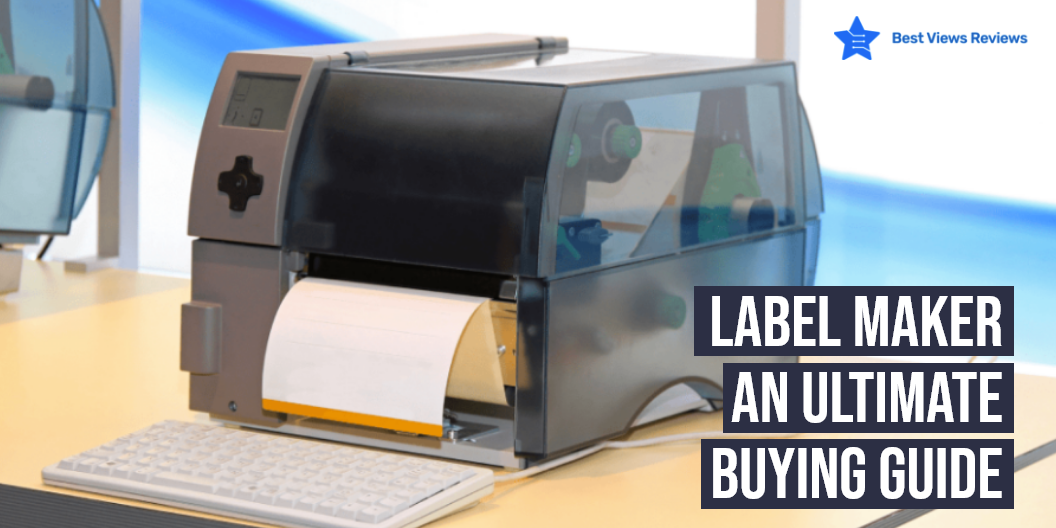
Label Maker: An Ultimate Buying Guide

label maker

A label maker can create labels for you that help you tag your items and segregate them. These labels help you organize things quickly and can save your time significantly. A label maker is ideal for making custom stickers for a business or organization. Label makers are highly useful and versatile. We have reviewed some of the best label makers on the basis of their print quality that you can consider buying.

Factors to Consider Before Buying Label Makers

Number of Lines

It’s advised to check the specifications of the model first if you want to print multiple lines. Only a few label makers have the feature of printing multiple lines. That is why it is good to verify before buying. You’ll be needing a label maker with multiple lines if you intend to use your label machine for printing address labels.

Wired Vs. Wireless

Wired label makers connect through a USB port whereas wireless ones remain wire-free and convenient. That is why more people are slowly switching to wireless versions. According to customer reviews Brother P touch PTH110 is a nice option that you can consider if you’re looking for a portable and wireless label maker.

Power Source

You should check the power source of the device while buying handheld label makers. Some come with rechargeable batteries while others use AAA or AA batteries that have to be replaced regularly. We recommend you to go for rechargeable batteries as they save the headache of replacing batteries.

Label Compatibility

Most of the label makers require paper rolls that are compatible with them. For example, thermal printers are compatible with thermal printing rolls.

Print Resolution

The print resolution you choose will define what work you intend to do with it. A commercial environment requires a high-resolution label maker that gives a professional finish. The standard label maker is enough if you want to use it for school projects. The customer reviews of Brother P touch PTD210 show that it comes with 14 fonts and 10 unique styles that allow adding a personal touch to the labels.

Display

You have to consider the display of the label maker while buying handheld makers.  LCD or Graphic displays help to get you a strong visual idea of how your label will look once printed.

Types Of Label Maker

Personal Label Maker

Personal label makers like Phomemo-M110 are great for household projects like organizing cupboards, labeling boxes, and naming possessions. A handheld label maker is the best option for this. They are compact in size and feature a portable design.

Desktop Label Maker

These are heavy-duty label makers that are great for home offices and small businesses. Xyron Creative Station reviews claim that it is great for official work. They are perfect for being used on a regular basis. They are somewhat compact, sturdy, and boast more capabilities than personal labelers.

Direct Thermal Label Makers

Direct thermal label makers use sensitive paper and burn the characters into the sheet. The downside here is that the label fades after a few months. Thermal transfer label makers use a combination of wax and resin allowing the numbers and texts to be easily readable.

FAQs About Label Maker

What Does A Label Maker Do?

Label makers are compact devices that are used for printing self-adhesive labels or tags. You can use these label makers for both home and office purposes. There are different types of label makers available personal, desktop, etc for different purposes. There are many advanced features offered by these makers. The customer reviews of DYMO LetraTag show that it features internal memory that stores up to 9 labels and prevents time wastage.

How To Load A Label Maker?

It is simple to load label makers like DYMO LetraTag. Place the label reel on the spool and press the locking ring on the right side. Slide the spool assembly into the cradle on top of the cover. Insert the label inside the feed slot after that and close the cover.

How To Start A Label Maker?

It is easy to start label makers. Place the installation CD into your PC and follow the rules. Use the USB cable and power cord to connect the label with the computer.

How To Reset A Label Maker?

You have to turn off the label machine to reset it. Hold down the shift key and R letter key. Press the power key once to turn on the machine while holding down the keys. Release the keys and then press the enter key.

Do You Need Ink For Label Maker?

The answer is No. A label maker does not require ink to work. It uses thermal print heat to print labels. This is a specially treated heat that is great for printing heat-sensitive labels.

Conclusion

Label makers are easy to use and make sorting simple. Their durability and convenience make them a worthy product. You can use these makers to put a label on a surface that you want to mark for future reference. These makers are used by a variety of professions from business to government.

BestViewsReviews rates and reviews hundreds of desktop label printers and labeling tapes on the basis of their adhesion, print quality, and packaging.
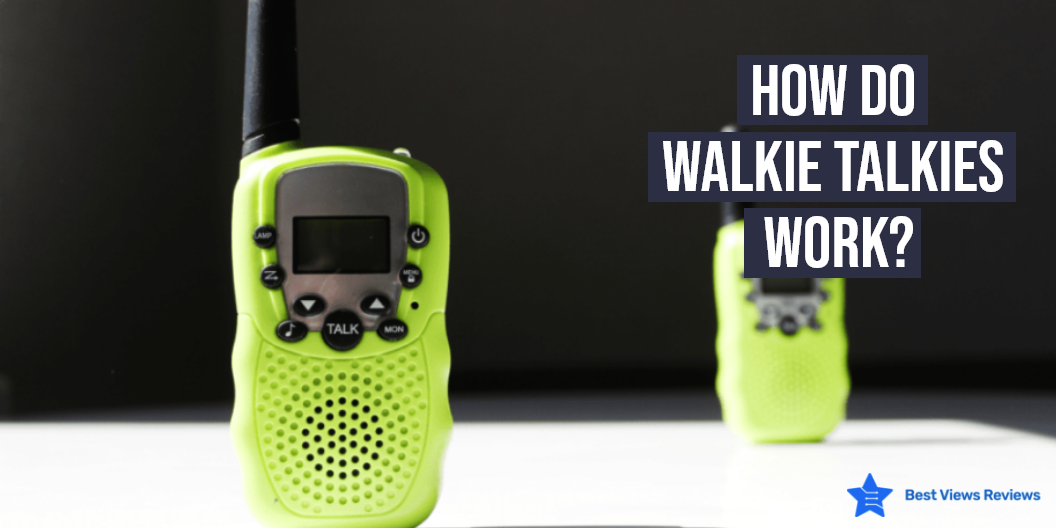
Know How Do Walkie Talkies Work?

walkie talkies

A walkie-talkie is a portable device that helps you communicate during emergency situations with the availability of different channels. It offers seamless communication in the absence of a network. This portable communication equipment works on the push-to-talk technology, which allows only one person to talk at a time. There are many benefits of walkie-talkies and having one at your disposal can offer you an efficient and affordable way of communication.

How Do Walkie Talkies Work

Radio signals

The push to talk button helps you communicate by converting your voice to radio signals in long-range walkie-talkies. These radio signals are part of the electromagnetic spectrum and travel at the speed of light to reach the channel towards which the signal has been aimed. 

In some situations, you might also experience interference in the communication which happens because too many frequencies can be communicated at once. The message becomes difficult to pass through in such situations. Walkie-talkies have improved with the advancement in technology now. You can also transmit messages seamlessly through jammed airways with many advanced models. 

FRS/GMRS radios 

Family radio service and general mobile radio service are the two frequencies that have been allotted for public use and operate at 460 MHz in wireless walkie-talkies. FRS operates at low power and works well for short-range communication. GMRS on the other hand is more powerful and offers long-range communication. The message also transmits farther using repeaters. The BaoFeng BF-F8HP has got positive reviews for its VHF range of 136-174 MHz(Rx/Tx) and UHF range of 400-520 MHz(Rx/Tx).

CTCSS/DCS

The continuous-tone code squelch system and digital coded squelch technologies are used in industrial walkie-talkies. In these, encoding takes place to eliminate the mixing of voices. Sometimes you might hear a stranger’s voice on the device when you are on the same channel. CTCSS/DCS technology prevents this from happening.

The devices like Winehouse Walkie Talkies are kid’s toys that are waterproof and include 3*AA1000mAh batteries. They have got good reviews for Auto-squelch technology that reduces interference.

What Are The Components of Walkie Talkies?

A walkie-talkie like best BAOFENG UV-5R is a handheld communication device that comprises many components for smooth working. The main components of walkie-talkies are as follows.

  • Microphone/Speaker- Microphone is used for recording audio and sending audio messages. Loudspeakers allow you to listen to the received audio messages
  • Antenna- It is responsible for transferring and receiving radio waves and other signals
  • Function Buttons- They are used for changing device settings and channels.
  • LCD Display- The LCD display is to show current frequency, channel details, battery level, and more.
  • Battery- It provides power to the device. A walkie-talkie may take AA or AAA batteries.

Walkie-talkies like NEHOPE Walkie Talkie have some other components too. They equip on/off switch, volume button, LED light indicator, transmit call tone, monitor, and PTT button.

How to Use Walkie Talkies?

A walkie-talkie is a two-way radio communication device that you can use to communicate with your group of friends or mates. It has different frequency bands, called channels. All individuals have to switch to the same channel to be able to communicate with each other. The loudspeaker stays on by default and switches to the microphone when you press the push-to-talk button for speaking. You can give your message by pressing the PTT button and other members in the same frequency channel will get the message.

This device is half-duplex which means only one individual can speak at once. This is because a single channel sends single only in one direction. Other members will have to wait for your message to get over first. This is not the case in full-duplex devices like the telephone, where you can speak and listen at the same time.

How Long Do Walkie Talkies Last?

Most walkie-talkies last for about 18 to 24 months with their batteries losing their charge. The rechargeable batteries can last for up to 12 hours on a single charge. In many models, the batteries may take around 3 to 4 hours to get fully charged. The rechargeable batteries are more durable and have a life of about 3 years. You can anytime replace the batteries of your selected model if you are using this device extensively.

The reviews of Arcshell Long Range Two-Way Radio show that it is a compact, rechargeable model that uses 2 1500mAh high capacity Li-ion batteries.

Conclusion

Walkie-talkies are budget-friendly gadgets and provide instant connectivity. They are used for group communication. The uninterrupted service is provided throughout emergencies and the interaction is also clear in most instances. We also have a dedicated buying guide for a walkie-talkie to help you with your first purchase.

BestViewsReviews rates and reviews the best long-range walkie-talkies and two-way radios based on their popularity, demand, and standards.