How to Cut a Tree with a Chainsaw?

Cut a Tree with a Chainsaw

If you want to know how to cut a tree with a chainsaw, then this is the place to be. Chainsaws are the handiest tools when it comes to chopping trees, or branches efficiently. Gone are those days when one would take out the axe or a manual saw to cut down trees. With every passing model, chainsaws are getting better, offering a whole new world of features to make our life easy.

A chainsaw is an outdoor tool that contains a mechanical chain along the length of the guide bar with teeth to chop heavy logs of wood or trees easily. Read our beginner’s guide to know about the tips & tricks for starting a chainsaw. If you don’t want to invest in a brand new chainsaw, provided you rarely use it, you can also go for a used chainsaw. This blog focuses on the process of cutting trees with a chainsaw and how to go about it.

Before we delve further, let’s take a look at the basics first:

How to Start a Chainsaw?

Place the chainsaw in a stable ground and remove all hindrances like objects, people, pets, etc. Grab the chain brake and engage it. Remove the safety switch and pull the trigger. You should engage the trigger for continued operation until the motor starts completely. However, the ignition process is different when it comes to battery-powered and gas-powered chainsaws.

How to Cut a Tree with a Chainsaw?

The entire cutting process happens in 3 main steps- cutting, limbing, and bucking. But before we even start to cut, there are certain things you should look at, if you don’t want to create havoc in the area surrounding the tree. Read our blog to know the tips to use a chainsaw the right way.

  • Check Permits

Check the area where you want to cut the tree. Certain areas require permits before felling a tree.

  • Prepare

Navigate the area before cutting a tree. If it is a large tree and other lesser tall trees are surrounding it, there is a good chance that even they might come down the tree. Similarly, check for power lines or houses in the vicinity. Based on the location and the tree, identify the direction where you want the tree to fall. You should have a proper truck to carry the logs back when the task is done.

  • Check the Condition of the Chainsaw

Ensure the condition of the chainsaw before taking up a task. If the blade seems dull use a chainsaw sharpener and get the blade ready for some heavy log cutting.

  • Get Your Safety Gear

Make sure you are ready for the task. Equip yourself with chainsaw accessories and safety gear like a helmet, safety boots, eye shield, earmuffs, cut-resistant gloves, etc.

In Action: Cutting the Tree

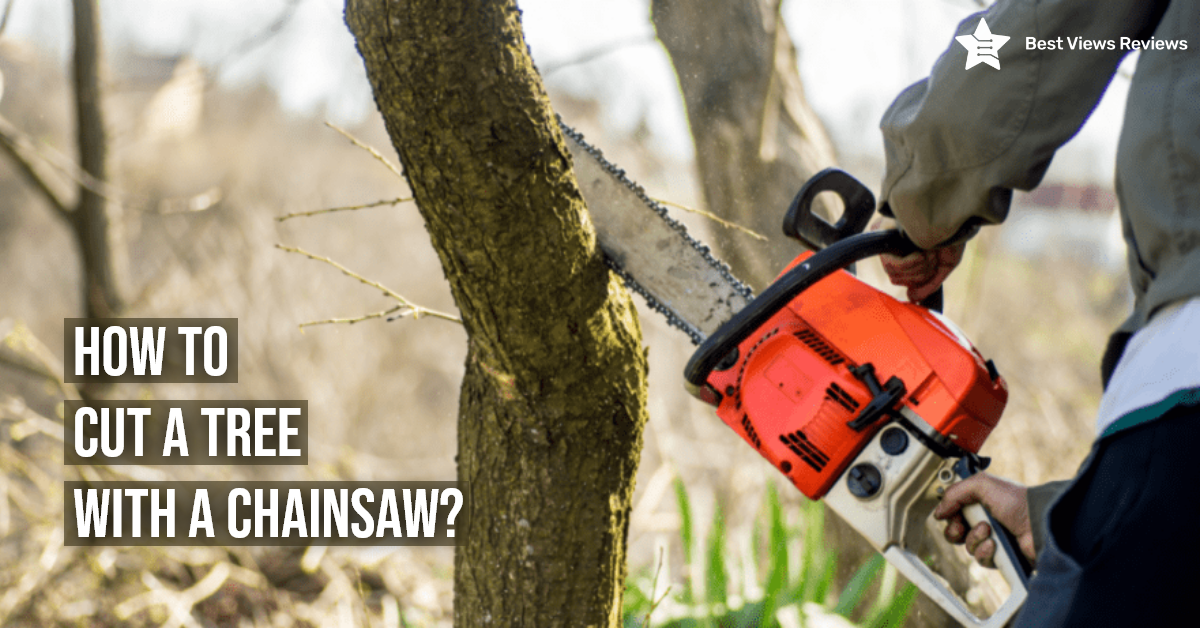
The process of cutting involves making face cuts on the trunk. Reviews of Mereced 4 Inch 20v Electric Chainsaw show that this portable chainsaw can cut through thick barks easily. There are three types of face cuts that you can choose from. 

  • Open-Faced Notch Cut that varies between 70 Degrees and 90 Degrees
  • A conventional Notch Cut that is made at a 45-degree angle. The bottom of the cut is flat, and the top is angled
  • Humbolt Notch Cut is also made at a 45-degree angle but, the top of the cut is flat while the bottom is angled
  • If you have made the face cut, back cut the tree as it will disconnect it from the stump. This cut should be 10% of the diameter. If you are going for an open-faced notch, the back cut should be at the same height as the front cut. In the case of a conventional cut, you should cut 1-inch above the bottom cut. While for a Humbolt notch, it should be 1-inch above the top cut

Remember to use the chainsaw blade to cut in the direction where you want your tree to fall.

Limbing the Tree

Limbing is when you remove the branches from a fallen tree. While cutting the lower branches, use the bottom of the chainsaw, where the chain will pull the saw out from you. While cutting the upper branches use models like Greenworks 16-Inch 40V Cordless Chainsaw where the chain will push the saw towards you. You can cut lower limbs can from the underside too. For the limbs under tension, cutting them can be tricky. Start cutting the tree after all the tension from it has been relieved.

Bucking a Tree

Bucking a tree means cutting a tree into smaller halves. It works the best when cut near the compression of the trunk. When the two segments of the trunk fall together, compression is formed. Cut halfway through such sections and then cut from the opposite side. For logs on the ground, cut halfway through each side and make sure the saw doesn’t come in contact with the ground. Else you might lose control. Try to cut equal sizes as it will help during loading and storing.

Key Take Away

Cutting trees with a chainsaw can be an easy task when you know which size chainsaw to go for. We recommend that you try on smaller trees and thick growth before going for a bigger tree. If you frequently need to cut big trees, go with the one that has less vibration like BLACK+DECKER 40V MAX Cordless Chainsaw. This model has got good reviews for its longer runtime and improved performance.

BestViewsReviews rates and reviews the best products based on their quality, performance, and durability to simplify your buying process.
Choose Between Gas Vs Battery Chainsaw

Gas Vs Battery Chainsaw

Chainsaws are cutting devices that use a rotating chain drive coupled with a sharp set of teeth. Electricity, batteries, or gas can power this device. It’s challenging to decide between a gas vs battery-powered chainsaw. The battery-powered tool is suitable because of its convenience. Chainsaws powered by gas are still available, but many professionals are switching to battery-powered models. Gas chainsaws are perfect for heavy-duty work and powerful performance.

Pros of Battery Chainsaws

Portable

Models like Greenworks 40V are portable and easy to carry. It has a weight of 6 pounds. It has a 2.0Ah power battery that delivers fade-free power. They provide multiple cutting positions via a wraparound handle for simplicity of use.

Silent

Battery chainsaws like DEWALT Chainsaw reviews are good. It is more silent than other gas variants. These tools also have quieter operations that aid in a harmonious environment. Make sure you choose the model that follows the quiet working mechanism.

Ergonomic

A model like CRAFTSMAN 41AY4216791 is not exhausted fumes with the battery chainsaw. This results in a cleaner and healthier environment. They are also compact and lightweight. They weigh around 8-10 lbs and are easy to maneuver. You can carry them around with little effort.

Lower Vibrations

Battery chainsaws offer instant torque and get more work done. The vibrations are also less and you can accomplish your job without getting tired. The intensity of the vibrations depends on the chainsaw size. Having the right chainsaw size will help you in getting the job done.

Interchangeable Batteries

Many battery-powered chainsaws have interchangeable batteries. You can interchange the batteries if they’re of the same manufacturer.

Hassle-free Use

The battery models are easy to use and require little maintenance. You don’t have to mix the gas or get refueling done. You also do not need to worry about bad fuel or spark plugs. The reviews of Seesii Cordless Electric Chainsaw is positive because it is a lightweight model that weighs just 2.4 pounds.

Cons of Battery Chainsaws

Less Sturdy

The battery-powered electric chainsaws are less sturdy. They are not good for heavy-duty cutting or extensive usage.

Needs Charging

Your battery might run out in the middle of your work. Many people buy spare batteries to avoid this situation. Finding charging outlets can be tricky sometimes. You cannot operate your saw from remote locations.

Pros of Gas Chainsaws

Powerful

You don’t have to worry about the power of these machines. They perform to the best of their abilities. They are equipped with a high-power engine that generates effective torque for cutting large tree trunks.

Variety of bar lengths

Gas saws can come with a variety of bar lengths to fit your job’s needs. They provide multiple cutting positions via a wraparound handle for simplicity of use.

Heavy-duty Work

Gas-powered chainsaws are more useful for accomplishing intensive tasks, like cutting giant trees and branches. These machines are ideal for heavy-duty work.

Variety

Gas chainsaws offer great variety. A lot of products with different features are available for your convenience. You get options in bar length, engine, as well as in many more things if you’re going for a gas-powered chainsaw.

Cons of Gas Chainsaws

Heavyweight

Gas-powered chainsaws like COOCHEER 62CC Chain are heavier than compared the battery-powered variants. They aren’t easy to carry around. Make sure you check the weight of your selected model before buying.

Higher Initial Cost

The upfront costs involved in a gas-powered chainsaw are huge. The running cost and maintenance cost is also more in gas-powered models. You should use chainsaw oils to prevent your chainsaw blade from getting damaged.

Less Ergonomic

Gas-powered chainsaws produce fumes and are noisier. The engine housing also produces vibrations while working, which makes the overall operation less efficient.

Requires Extra Care

You need to be more careful while using your gas-powered chainsaw like 20″ Chainsaw 62CC 2-Cycle Gas chainsaw. We recommend you follow the exact guidelines from the manufacturer.

Conclusion

In choosing between gas vs battery chainsaw, consider your usage, budget, and requirements. The battery-powered model is a more advanced version with higher portability and better maneuverability, but it lacks power. Powerful gas models need more maintenance, but are more expensive.

You should go with a battery-powered chainsaw if you want a more compact and lightweight chainsaw and can compromise the power of the machine. Read our buying guide to buy the best chainsaw model.

BestViewsReviews rates and ranks hundreds of top-selling chainsaws and best miter saws based on convenience, build quality, and ease of use.

Buying Used Chainsaw: What You Should Know

used chainsaw

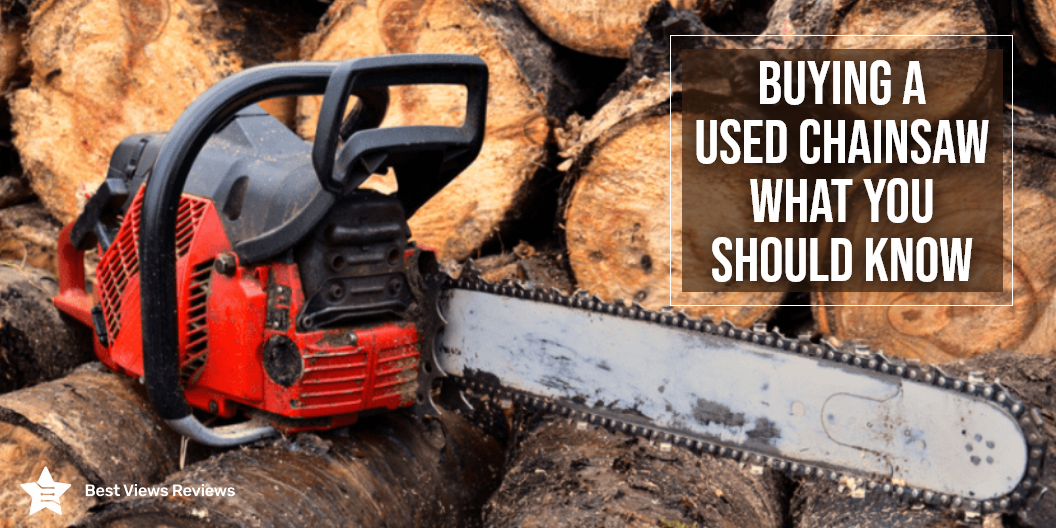
While investing in a new product, we often revisit the idea of buying a used one to save a few bucks. One such product is a Chainsaw. Chainsaws are absolutely essential if you maintain your yard regularly. Due to harsh weather conditions, branches fall, and the thick and heavy pieces are tough to remove manually. If you want some firewood, this tool comes in really handy.

But is buying a used chainsaw a good idea? The process involved in starting a chainsaw is a bit more complicated than it looks especially for beginners. Even the most experienced users are skeptical of investing in a new one. In this guide, we’ll walk you through some tips that will help you bring home the one that is the best and budget-friendly.

Tips for Buying a Used Chainsaw

Reflect On Your Needs

Before buying a chainsaw, it’s very important to realize the purpose you need it for. If you want a lightweight variant, an electric chainsaw like Mereced Chainsaw that comes with a portable handheld is the one for you. If you want to go with a chainsaw that is easy to carry and functional, a battery-operated model would be great. A fuel-powered chainsaw is perfect for you if you want something really powerful.

Reliable Brands

When you’re going with a second-hand chainsaw, buying one like DEWALT DCCS620B that has excellent reviews about its durability can be helpful. Brands like Stihl, Echo, and Husky manufacture chainsaws with high-quality material. The chainsaws from these brands are known for their longevity.

Don’t Go with a New One

Most new pieces are sold because of issues and defects caught at an early stage. You can always reset the chainsaws for efficient results and effective working. The old chainsaws are safer if they’ve been used less and are still reliable. Additionally, make sure that you are buying the right chainsaw size. A wrong size may lead to violent kickbacks and accidents.

Examine it Carefully

Before buying it, it’s very important to examine it thoroughly. The good part here is that you can use it and check if it works well up to your expectations. The start should be smooth as well. You should also check the condition of the chain and chain guard. Give more preference to a cleaner one with fewer scratches. If there are some minor repairs, you can negotiate the price as well. Make sure to understand the right way how the chainsaw works, as the product may be a newer model with feature variations. Our customer reviews of Greenworks Cordless Chainsaw are positive about its battery power and motor energy.

Check the Oil

When it comes to used chainsaws, it is important to check the oil levels and leakage to avoid any mishaps. Having a decent oil level will ensure that all parts are sufficiently lubricated for the smooth functioning of the equipment.

Where Can You Buy a Used Chainsaw?

Now that you know about all the tips and track, you would want to know where you can get a used chainsaw from. We highly recommend that you first check with your local dealer once. It’ll be very easy for you to explain your exact requirements to him. Yard and garage sales in your area are also very helpful. Auctions on websites like eBay help you get a good product and reasonable costs. You can also let your family, friends, and acquaintances know of your requirement.

Our Take on Buying a Used Chainsaw

Second-hand outdoor tools like chainsaws and chainsaw accessories, call for considering certain factors before their purchase. Though buying a used chainsaw comes with its own set of instructions, they are ideal options if you are running on a budget. Thus, If you’re looking forward to buying a chainsaw that you’ll only need on specific days and which will only help you with small tasks, a BLACK+DECKER Cordless Chainsaw, can come in handy as it is only 12-Inch in size. We hope our guide will help you make the right decision.

 If you do make up your mind to invest in a new one, head over to BestViewsReviews. They list down the best of products based on reviews left by consumers like us. So, you know you get the unfiltered opinion. Happy shopping to you.

How to Reset the Chainsaw Chain: A Guide

how to reset a chainsaw

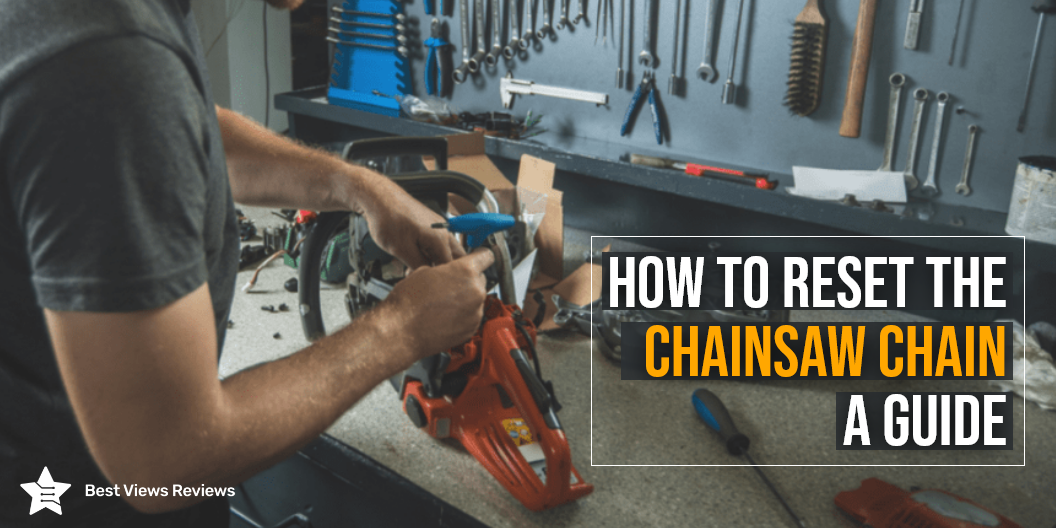
The technique to reset the chainsaw chain may seem easy but if not done properly may lead to malfunctioning of the chainsaw or worse, injuries. Chainsaws are robust yet sometimes tricky machines with multiple small parts and pieces. The chainsaw chain and the guide bar are some of the crucial parts of this machine.

Often when you use a chainsaw for longer periods, the chainsaw may get stuck in a cut, resulting in the derailing of the chainsaw chain from the guide bar. This happens because the chainsaw heats up and loosens allowing the chain to slip off the guide bar. This blog will take you through the steps you need to follow in case, reset the chainsaw chain.

Steps to Reset the Chainsaw Chain

Resetting the chainsaw is an easy process, but frequent derailing of the chain may lead to damage to the chainsaw. Thus, knowing how to start the chainsaw correctly will reduce the pain of resetting significantly. Keep in mind that if the chain has been rusted, then it is time to buy a new chainsaw chain else it could damage the entire equipment.

Removal of the Chainsaw Sprocket Cover

Unplug the thermal chainsaw’s spark plug connector first. Remove the two bolts that hold the housing and the chain guide bar with a 13 mm pipe wrench and set the housing aside with the two clamping bolts.

Remove the Chainsaw Chain Tensioner

You can unscrew it with a screwdriver. Move the chain tensioner backward. Turn the chain spool counterclockwise and unscrew the cover. Loosen the wingnut and you can remove it. At the level of the bar, turn the chain tensioner wheel until it reaches the end. Always wear safety gloves to avoid the risk of hand injuries. Take the chain and guide rail and place the first on the second.

Remove the Old Chain

Disengage the defective chain from its guide bar by using a flat screwdriver. Removing the motor pulley by removing the guide bar and chain assembly.

Put the New Chainsaw Chain

Check the direction of rotation of the new chain after removing the new chain from its case with its guide. The arrow symbol will help you determine the rotation direction. You should face the cutting teeth up and toward the front of the guide. The chain must be properly inserted inside the rails of the guide. The reviews of Oregon S62 AdvanceCut Chainsaw Chain for 18-Inch Bar shows a versatile design and easy set up of the equipment

Put the Protective Cover of the Chainsaw Back

Make sure that the protective cover is properly replaced by reassembling it with one hand while holding the guide and chain with the other. After tightening the two bolts with your 13 mm wrench, tighten them by hand. Do not tighten completely, since you will need to re-calibrate the chain tension afterward.

Chain Tension Adjustment

You will need a flat screwdriver for this. Below the two bolts that you just reinstalled, locate the adjustment screw. It is necessary to turn the adjustment screw clockwise in order to tension your chain. You can loosen it by turning the adjustment screw counterclockwise. The guide can derail if the chain is too loose. The chain guide can be accelerated if the chain is too tight, causing smoke if it is not greased.

It is recommended that your chain hangs partially from the guide, allowing 1 cm of maximum deviation. You might also need to use a wrench to tighten the crankcase bolts once you have the correct tension set. The reviews of the Oregon R34 AdvanceCut 8-Inch Micro Lite Chainsaw Chain indicate an easy chain adjustment system and easy function.

Start the Chainsaw

When the chain is driven by the motor pulley, the chain will heat up, which will cause the guide to expand and therefore create additional tension. You should check the oil first, which will ensure effective lubrication. Oil and fuel tanks are next to each other. When you are not using your chainsaw, put the protective case around the guide, this will prevent potential cuts and damage to your device.

Which Way Does the Chain Go on a Chainsaw?

The chain should rotate counter-clockwise when the bar of your chainsaw is on the left side of the engine. The cutting edges should face away from the engine when the bar is on the left side of the engine. The reviews of the Oregon S40 10″ Replacement Saw Chain suggest an easy assembly and chain installation. This allows convenience to the user.

How Tight Should a Chainsaw Chain Be?

When sawing, the tension of the chain is important to ensure that it does not come loose again. The chain is optimally tensioned when it can be lifted between 3 and 4 millimeters above the guide rail.

Is it Worth Sharpening a Chainsaw Chain?

After chewing through thick layers of wood, the cutter teeth are sure to become dull, decreasing the tool’s effectiveness and making it more difficult for you to control. Maintaining your chainsaw’s durability, functionality, and portability by regular sharpening will ensure that it remains useful. Read our dedicated blog on chainsaw chains to know more about them.

Why Does The Chainsaw Chain Keep Loosening?

The process is purely physics-based. When metal gets warm, it expands. The chain will thus, expand as it heats up when you’re using your chainsaw. Chainsaws that start tight, but then loosen up are probably caused by this.

Reset a Chainsaw Chain: Conclusion

Understanding the parts and the built of the outdoor tools like chainsaws will help you troubleshoot minor problems that may arise due to continuous use. Kowing how to start the chainsaw the right way will save you a lot of trouble in the long run. Knowing your machine is as important as understanding how it works. If you are looking to buy, don’t miss out on our exclusive blog on chainsaw sharpeners.

With this guide, you should be able to solve such issues yourself resulting in an efficient cutting job. You can also check out BestViewsReviews for the best chainsaws & chainsaw accessories rated on reviews left by consumers like you. They review the products so that you can make a better buying decision.