Indoor vs. Outdoor TV Antennas: Which One Is Right for You?

tv antennas

As cable prices continue to rise, choose between indoor and outdoor TV antennas because most individuals think antennas are a cost-effective alternative for accessing live television. But the question remains: should you go for an indoor or outdoor antenna?

Indoor antennas offer simplicity and convenience, making them perfect for urban dwellers. Conversely, outdoor antennas can deliver robust signals and access more channels, which is particularly beneficial in rural areas. Recognizing the strengths and weaknesses of each antenna type will guide you in making an informed choice that elevates your viewing experience. You can check bestviewsreviews for the same.

Pros and Cons of Indoor TV Antennas

Pros of Indoor TV Antennas

  • Easy Installation: Indoor antennas are generally easy to install. Typically, you only need to plug them into a power source and adjust their position to achieve the best reception. Many models come with clear instructions and some even feature adjustable elements to enhance signal strength based on your specific location.
  • Space-Saving: Their compact size makes indoor antennas an excellent choice for small living spaces, like apartments or homes. Because they don’t require extensive mounting or external hardware, these antennas can easily fit on shelves, walls, or even behind furniture, maximizing space while providing access to various channels.
  • Cost-Effective: Indoor antennas generally offer a more affordable alternative to outdoor models, making them a cost-effective option for viewers aiming to reduce their cable expenses. With prices often ranging from $20 to $100, indoor antennas provide a budget-friendly way to access local channels without the ongoing costs associated with cable subscriptions.
  • No Exposure to Weather: Keeping the antenna indoors safeguards it from environmental factors such as rain, snow, and extreme temperatures, which can damage outdoor equipment over time. This protection enhances the antenna’s longevity and reduces the need for regular maintenance or replacements.
  • Portability: Indoor antennas can easily be moved from room to room, allowing you to find the optimal position for signal reception in various areas of your home. Additionally, their lightweight and compact design makes them convenient for travel; you can take them with you in an RV or temporary accommodations.

Cons of Indoor TV Antennas

  • Limited Range: Indoor antennas typically have a shorter range, usually around 30 miles, compared to outdoor antennas that can reach 100 miles or more. This limitation can restrict access to channels farther away, making it crucial for viewers in rural areas to consider their location and signal strength before choosing an indoor model.
  • Signal Interference: Obstructions like walls, furniture, and electronic devices can interfere with the signal, resulting in poor reception and fewer available channels. These barriers can disrupt the line of sight between the antenna and broadcast towers, making it essential to position the antenna strategically in your home.
  • Varying Reception Quality: The location of the antenna within your home can greatly impact reception quality, often necessitating adjustments for optimal performance. Placing the antenna near windows or higher up can enhance signal strength while moving it away from walls or electronic devices can reduce interference.
  • Potential for Higher Noise Levels: Indoor antennas can capture more electronic interference from appliances and devices within the home, which can negatively affect signal clarity. This interference often stems from microwaves, routers, and televisions that emit electromagnetic waves. To minimize this disruption, it’s important to position the antenna away from these devices and in areas with fewer potential sources of interference.
  • Less Durable: Although indoor antennas are shielded from weather conditions, they can be more vulnerable to wear and tear due to regular handling or accidental bumps. Frequent movement or adjustments can lead to damage over time, such as loose connections or weakened components.

Pros and Cons of Outdoor TV Antennas

Pros of Outdoor TV Antennas

  • Greater Range of TV antennas: Outdoor antennas generally offer a longer range, often up to 100 miles or more. This increased range enables you to access channels farther away from home, making them particularly valuable for viewers in rural areas or regions with fewer broadcast towers. You can check on bestviewsreviews.
  • Improved Signal Strength: Positioning outdoor antennas outside allows them to capture stronger signals, reducing the likelihood of interference and resulting in clearer picture quality. This optimal placement enhances their ability to receive broadcasts effectively, making them a reliable choice for viewers seeking high-quality reception. You can explore options on bestviewsreviews.
  • Less Interference: Outdoor antennas are less prone to interference from household electronics and physical obstructions such as walls and furniture. This positioning leads to more reliable reception, ensuring that viewers enjoy consistent access to their favorite channels without the disruptions often caused by indoor obstacles.
  • Durability of TV antennas: Outdoor antennas are built to withstand various weather conditions and are typically made from durable materials that can endure rain, snow, and high winds. This robust construction ensures longevity and reliable performance, allowing them to function year-round regardless of environmental challenges.

Cons of Outdoor TV Antennas

  • Complex Installation of TV antennas: Installing an outdoor antenna often involves more complexity than setting up an indoor model. This process typically requires mounting the antenna on a roof or pole, and it may necessitate specific tools or even professional assistance to ensure proper installation.
  • Higher Cost: Outdoor antennas typically carry a higher price tag than indoor antennas, and you may also face extra costs for installation and ongoing maintenance. These expenses include hiring professionals for mounting and setup, and potential repairs or adjustments needed over time.
  • Exposure to Elements: Although outdoor antennas are built to be durable, they remain exposed to the elements, which can cause wear and tear over time. As a result, they may require occasional maintenance to ensure optimal performance and longevity. Regular inspections can help identify any issues early, allowing for timely repairs and adjustments to keep the antenna functioning effectively.
  • Space Requirements: Outdoor antennas typically need more space for installation, which can be a crucial factor for homeowners with limited outdoor areas. This requirement may necessitate careful planning regarding placement, ensuring the antenna is positioned for optimal reception while also fitting within the available space.
  • Potential for Legal Restrictions: Local regulations and homeowner association rules can create restrictions on mounting outdoor antennas, which may limit your installation choices. Before proceeding review these guidelines, as they can influence where and how you can set up the antenna. These regulations will help you make informed decisions and ensure installation is within local requirements.

Can Both Indoor and Outdoor TV Antennas be used Together?

Yes, indoor and outdoor TV antennas can be used together to improve your television reception. This combination allows you to leverage the strengths of each antenna type. An outdoor antenna can capture signals from distant broadcast towers, while an indoor antenna can pick up local channels.

To effectively merge the antennas, you would commonly employ a coaxial splitter to connect both to your TV. Balancing the signal strength from each antenna is crucial to prevent interference. This configuration can enhance channel options and improve the clarity of your picture.

Tips For Improving Antenna Signal 

Positioning Matters of TV Antennas

Position your antenna near a window or elevated in your home to reduce obstructions. The higher you place the antenna, the greater the likelihood of capturing a strong signal, as it will have a clearer line of sight to broadcast towers.

Avoid Obstructions

Position the antenna away from walls, large furniture, and electronic devices that can disrupt the signal. Aim for a direct line of sight to the broadcast towers, as it will significantly improve signal quality and reliability.

Use a Signal Booster

Consider using a signal amplifier or booster to improve reception, particularly if you reside in an area with weak signals or a TV antenna far from broadcast towers. This equipment can help strengthen the incoming signals, providing clearer picture quality and a wider range of channels.

Reduce Electronic Interference

To reduce interference, move or turn off nearby electronic devices such as microwaves, routers, and cordless phones. These devices can disrupt the signal, so minimizing their impact can lead to better reception and improved picture quality.

Use Multi-Directional TV Antennas

If you live in an area where signals come from various directions, consider using a multi-directional antenna to capture a broader range of signals. This type of antenna is designed to receive broadcasts from multiple directions, enhancing access to a wider variety of channels.

Reassess Your TV antennas Setup Periodically

Over time, environmental changes such as new construction or vegetation growth can affect signal quality. Therefore, it’s important to periodically reassess your antenna setup to ensure optimal performance and make any necessary adjustments for improved reception.

Commonly Asked Questions

1. How do I install indoor or outdoor TV antennas?

For an Indoor Antenna: Start by choosing a location near a window or high up to minimize obstructions and interference from electronics. Connect the coaxial cable to the antenna and your TV, then adjust its position for the best reception. Perform a channel scan to detect available channels and fine-tune as needed until you achieve optimal results.

For an Outdoor Antenna: Select a high location with a clear line of sight to broadcast towers, like a rooftop or pole. Gather the necessary tools and assemble the antenna according to the manufacturer’s instructions. Securely mount it, run the coaxial cable to your TV, and connect it. Power on your TV and perform a channel scan, making slight adjustments for the best reception as needed.

2. How far can I expect my TV antennas to pick up signals?

Indoor antennas usually range about 20 to 50 miles, but their performance can be impacted by obstructions such as walls, furniture, and electronic interference. In contrast, outdoor antennas generally offer a much longer range, often reaching 100 miles or more. Their height and clearer line of sight to broadcast towers enable them to capture signals more effectively.

3. What if I have multiple TVs in my home? Can I share an antenna?

Absolutely, you can utilize one antenna for several TVs in your home. Here are a few effective methods to make this happen:

Use a Splitter: You can connect a coaxial splitter to the output of your antenna to divide the signal and distribute it to multiple TVs. This device effectively allows you to share the signal without losing quality. To ensure optimal performance, choose a high-quality splitter, that will help minimize signal loss and maintain clear reception across all connected TVs.

Install a Distribution Amplifier: If the signals are weak after splitting think about adding a distribution amplifier. This device increases the signal strength before it reaches each TV, helping to preserve quality across all connections. By boosting the signal, a distribution amplifier ensures you enjoy clear reception on every TV in your home.

Run Coaxial Cables: You must run coaxial cables from the splitter or amplifier to each TV. Use high-quality cable to help prevent signal degradation and ensure reliable reception. Taking the time to choose the right cables will enhance your overall viewing experience across all connected TVs.

Channel Scanning: Each TV must perform its own channel scan once connected to the antenna. This process enables each television to independently identify the available channels, ensuring you can access the full range of content offered in your area. Taking this step is essential for optimizing your viewing experience.

Consider Cable Length: Remember that longer cable runs can result in signal loss. Therefore, keep the cables as short as possible while avoiding unnecessary bends or kinks. Minimizing the length and ensuring a straight path, can help maintain a strong and clear signal for optimal reception.

Conclusion

Choosing between indoor and outdoor TV antennas ultimately depends on your needs and circumstances. For making the best choice evaluate factors like your location, available channels, budget, and the layout of your home. By understanding the strengths and weaknesses of both types, you can select the antenna that enhances your viewing experience and meets your needs effectively. Whichever option you choose, embracing the benefits of antennas can lead to significant savings and a greater variety of channels to enjoy.
Digital TV Antenna; Know Everything About it

Everything About Digital TV Antennas

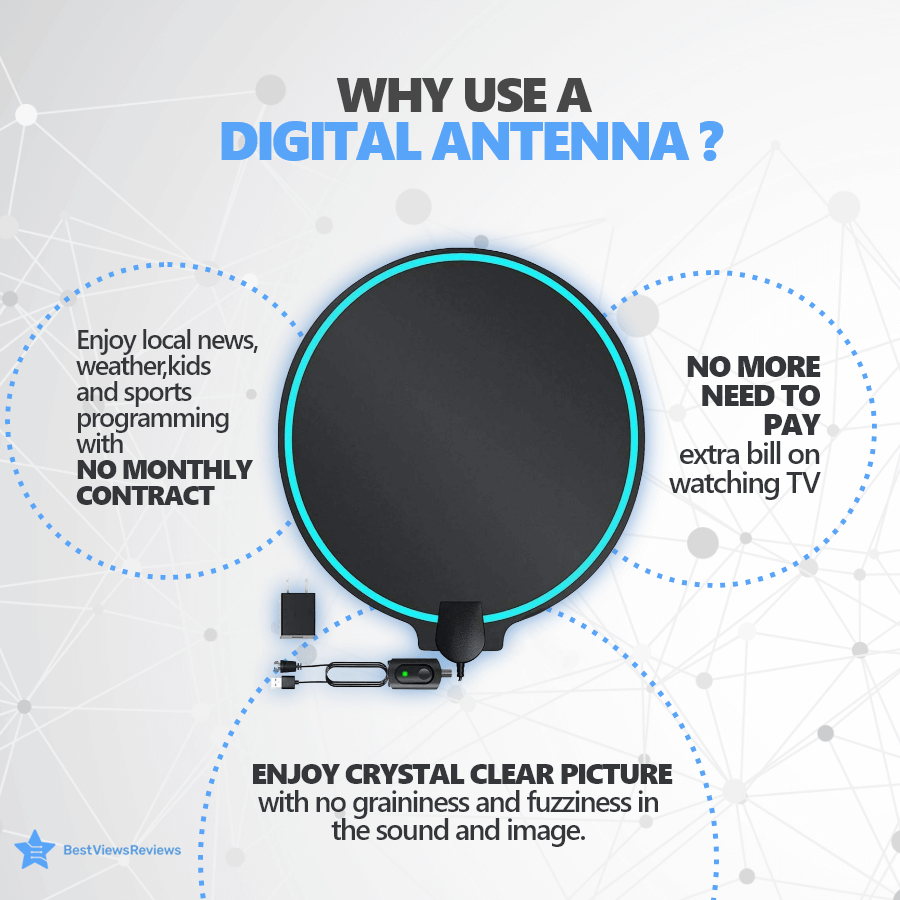
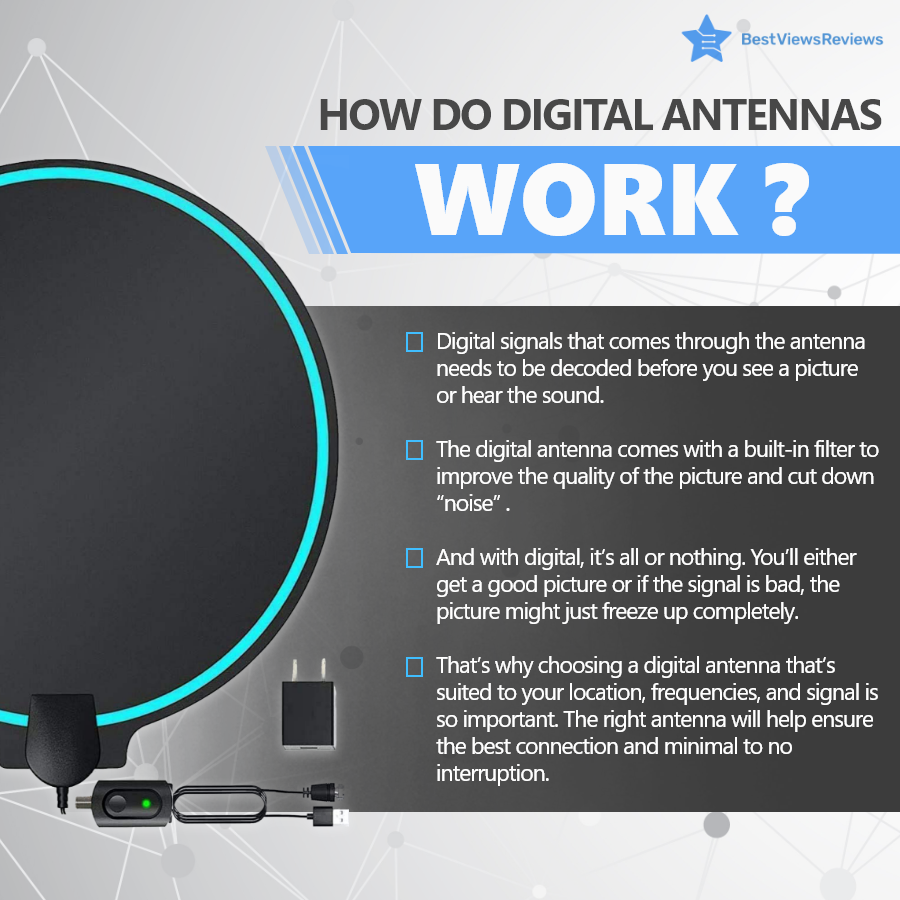
A Digital TV antenna picks up video signals that broadcast over the air and allows you to watch some of the best TV shows seamlessly. The mechanism works similarly to radio stations. The video signals they receive are HD and the picture quality is absolutely crisp and clear. 

Most digital TV antennas require quality reception for better picture quality. Using some signal locators, you can improve the signal strength. Digital antennas also broadcast various TV channels. We recommend you go for a particular channel or go through the description before making the final selection. 

How Does a Digital TV Antenna Work?

An HDTV antenna receives TV broadcasts but as electromagnetic signals. When a television station broadcasts runs, it converts from audio and video format into electromagnetic signals. The signal then travels to the antenna, then the TV tuner, and finally converts back into audio and video information.

Why is Amplification needed for Digital TV Antenna?

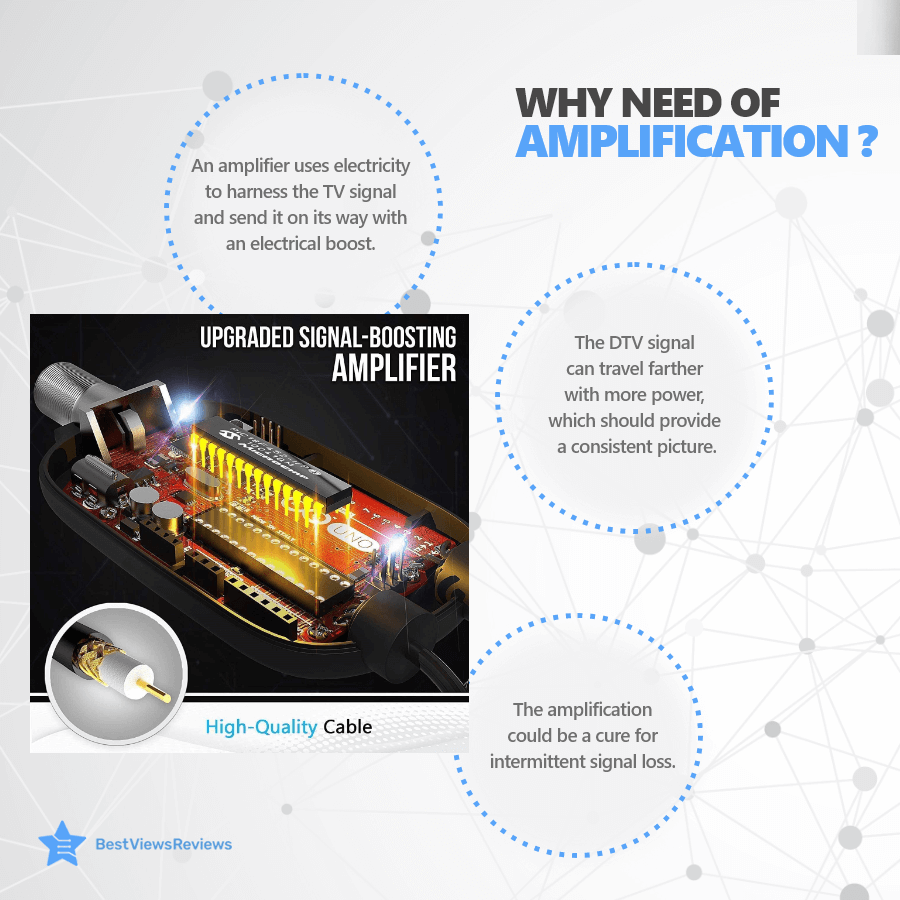
Amplification is an ideal solution to revive the signal loss when your TV antenna receives audio and video signals with interruption. Amplifiers use electricity to strengthen the signal and give it the necessary push for the digital tuner.  

Read our Guide on Amplifying a Digital TV Signal to boost your TV antenna signals, but remember, if the antenna is not responding to any signal, amplification won’t help you.

Purpose of digital amplification

Why Should You Use Digital TV Antenna?

Digital antenna like U MUST HAVE Amplified offers you the best channels along with providing you with the best reception in the area. It is popular among people because of its sleek and compact design, excellent performance, and high picture quality. There is no paid subscription with a digital antenna and it comes free of cost.

Reviews of GESOBYTE show that it uses the built-in smart IC chip and crystal clear filter technology to pick up signals within 200 miles range.

Uses of a digital antenna

Market Segmentation of Antenna

Outdoor digital TV antennas have seen a surge and accounted for the highest revenue share of over 4%. North America also contributed towards the highest revenue share in the Global TV Antenna market of over 4.5%. It is expected that the residential segment would become the biggest contributor to revenue share, rising over 4.5% between 2017 and 2026.

Categorization of target market of digital antennas

Digital Antenna- Market Overview

The global market size of TV antennas is expected to cross the total value of USD 0.2 Billion by 2026. It can grow at a CAGR of 4.4%.

Market overview of digital TV antennas

Conclusion

A digital HDTV antenna can be a suitable tool to fix signal loss. We suggest you go for an antenna that has a good dB setting. It can improve the over-the-air picture quality dramatically. Such antennas are attractive, easy to use, affordable, and come in many styles.

You can download the full infographics of Digital TV Antennas to include us as a reference. BestViewsReviews rates and ranks hundreds of TV Antennas on the basis of tech support, build quality, and installation.

The Best Indoor HD TV Antenna 2022

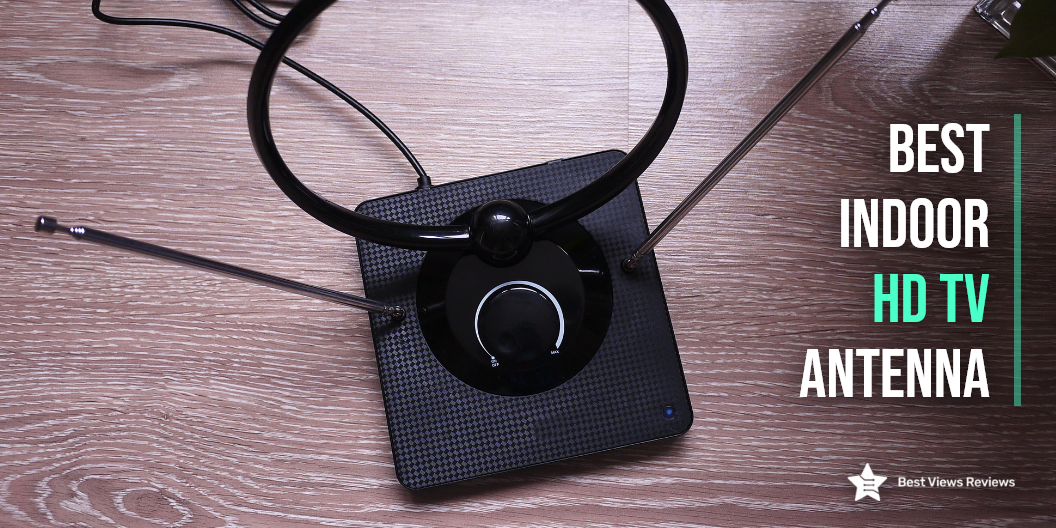
The best indoor HD TV antenna is an omnidirectional antenna that picks up over-the-air signals and broadcasts free channels and programs. They are designed for easy and quick setup, and you can easily place them on the table or the wall behind your TV. The paid cable TV connection has more channels, and the indoor TV antenna offers popular sports channels and other programs for free.

You no longer need to pay for expensive cable TV subscriptions. You can now watch your favorite TV channels at no extra cost. Indoor TV antennas are the absolute solution that you should look for.

Even while watching free programs, you will not be wanting to compromise with the picture quality. We have highlighted some worth-buying HD TV antennas in another blog post to assist you in your search.

Place your indoor TV antenna in an attic or second-story area, preferably near a window. The signals can be tampered with by objects in the room or roofing materials. It’s a good idea to try a few different attic sites. It is necessary to extend a wire across your home if your antenna is in one room and your TV is in another. This is because the antenna must be connected to the antenna (RF) input on your set.

You will need to place the antenna in the same room as the television in most cases. As a result, try a few higher spots in the space, such as towards the ceiling or along the wall. The Mohu Leaf, for example, is one of the latest flat antennas that may match the décor.

How Can I Boost my Indoor HDTV Antenna Signal?

Place Antenna Near a Window

The less in the way of your antenna and the broadcast towers, the better. Large walls and ceilings are definitely impediments. As a result, putting your antenna near or in a window frequently produces the best results. If there isn’t a huge impediment outside the window, such as a large tree or your neighbour’s brick wall. This can often provide the clearest line of sight to the transmission tower.

Place Antenna At Height

When you use the signal finder tools on TV Fool, AntennaWeb, or other similar sites. One of the things you’ll notice is that you’ll need to enter the estimated height of your antenna. This is for a significant reason. The higher you set your antenna, the better your reception will be. This is why outdoor antennas tend to pick up a large number of channels.

Attempt to position your antenna as high as feasible that you still want it near an outside-facing wall and by a window. When the TV is in the basement or the broadcast towers are far away, this may imply putting the antenna on a higher level or even in the attic. It may necessitate a little longer coaxial line. Just make sure you don’t pick a coax cable that’s too long because long cable lengths might weaken the signal.

Keep the Antenna Away From Metal

Metallic surfaces near your antenna can interfere with digital TV signals and prevent you from receiving them. This could cause problems if your antenna is placed in a window, but there are metal burglar bars or a metal bug screen right outside the window. Place your antenna in the middle of the attic is unlikely to produce beneficial results if your home has a metal roof.

List of Best Indoor HD TV Antennas

Gesobyte Indoor HD TV Antenna

The reviews of the Gesobyte TV Antenna are positive because it can reach up to 200 miles and can be placed almost anywhere in your home. Its sleek design and high signal reach range make this variant, a perfect must-buy item, for your non-stop entertainment.

WeGuard TV Antenna

The WeGuard TV Antenna has up to 130 miles of range is possible thanks to a smart IC chip and crystal clear filter technology. Signal reception is excellent. It’s simple to obtain the finest reception with this premium 18-foot coax wire. It filters out strong signals regularly.

U MUST HAVE Indoor HD TV Antenna

The reviews of U MUST HAVE Amplified TV Antenna is good because comes with a built-in smart IC chip based on new filter technology that helps in reducing FM signals and unwanted noise. This model covers a wide range of about 200 miles and provides extra channels and programs. For easy placement and better picture reception, it also comes with 18 feet long coaxial cable.

Vansky Indoor HD TV Antenna

The Vansky Indoor HD TV Antenna has a high-performance ultra-thin design. It comes with a sticker at the base for convenient multi-positioning. It also allows you can hide it behind the TV, lay it flat on the table, and stick it high on Wall or window. This indoor digitally amplified antenna is suitable for both digital TV and older televisions.

ANTAN DVB-T655VA Indoor TV Antenna

The ANTAN DVB-T655VA Indoor TV Antenna is a great way to get free HDTV. The antenna has a range of 25-35 miles and can receive UHF and VHF signals. The antenna comes with a 10ft coaxial cable for easy installation. It can reach up to 80miles and can be placed almost anywhere in your home. This model is easy to install and lightweight making it easy to mount.

Luxtronic Digital HDTV Antenna

The Luxtronic Digital HDTV Antenna includes a magnetic base and coaxial cable and has a 50-mile range. This antenna will give you the best possible reception whether you’re indoor or outdoor. This aerial antenna is 4K ultra-HD ready that ensures the best viewing process. It ensured signal strength with 360 degree reception,

Conclusion

We have everything you need to buy an indoor HD TV antenna, so you are at the right place. You can use these top picks as your first choice. Did you know that you can get indoor TV antennas that can be mounted outdoors as well? They can withstand adverse weather conditions since these models are extremely durable. You should make sure, whatever model you choose, that you pick a good one.

BestViewsReviews rates and ranks the top-quality TV antennas and best smart TVs based not their quality, performance, and durability.

HDTV Antenna: A Review

A modern TV antenna has become quite common in today’s households. You can mount them on a wall or behind your TV to receive better signals and improve picture quality. They are easy to place anywhere due to their compact design.

One such great product on the market is the clear digital TV antenna. It is a USB stick antenna. It’s one of the simplest, smallest, and most affordable antennas available today. Let’s review this product on several factors that you should consider to make a wise buying decision. HDTV antennas pick up video signals and allow you to watch some of the best TV shows seamlessly. We have listed some top-rated HDTV antennas in our guide so that you can bring the best one home. 

What Is An HDTV Antenna Used For?

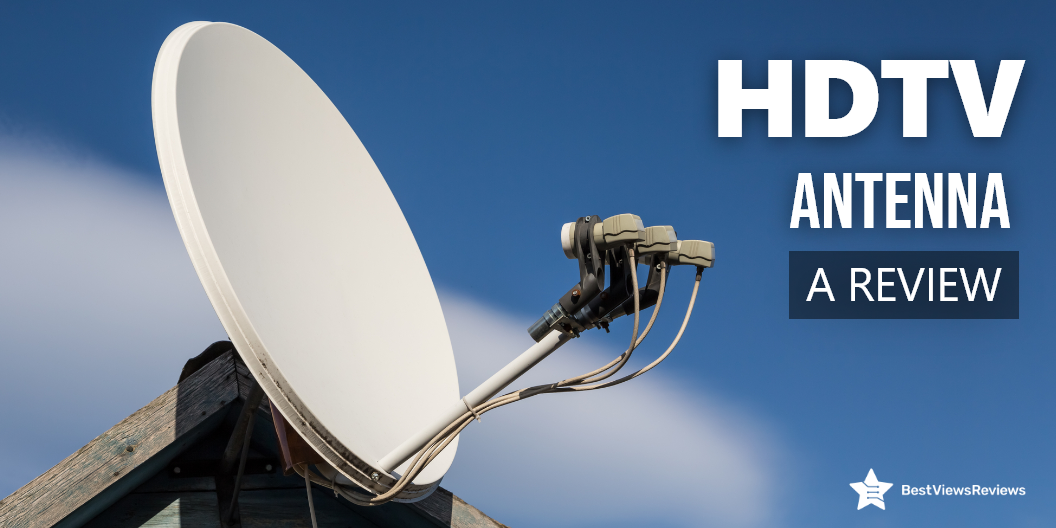
A television antenna is a set of specially placed wires or metal pieces that take up broadcast signals from television networks. HDTV antennas receive television broadcasts via electromagnetic impulses. It then converts them to video and audio and allows you to watch any programming you desire. You can access all of this for free since the FCC regulates the digital broadcast spectrum. You may, however, have to pay for the gadgets. All you will need is an HDTV and an HD antenna to enjoy some of your favorite channels in crystal clear high definition. A model like GE Ultra Edge has a tiny and flexible design. It is really simple to operate and provides excellent reception.

Is HDTV Antenna Good?

HDTV Antenna: Design

The incredibly compact design of the antenna like that of the GESOBYTE TV Antenna comes with built-in crystal clear filter technology. It can reach up to 250 miles in range depending on the area. A flat base is wide enough to make it stand upright easily.

The coaxial connector of antennas like the Vansky Amplified antenna provides both network and local television in full 1080 HD quality, for free. This advanced antenna with SmartBoostTM amplification outperforms TV antennas available from other manufacturers. The compact and directional antenna can sit on almost any surface and is designed to fit into any room environment.

HDTV Antenna: Performance

An HDTV antenna like a PBD Digital TV antenna with a range of 150 miles is compatible with 1080p and 4K resolution signals. The channel pickup and reception are strong for this antenna. The walls and other obstructions can cause occasional interruptions or inconsistent results. 

While comparing this antenna with others, it’s clear that the clear TV HDTV antenna like U MUST HAVE cannot penetrate the obstructions inside a house. This is one area where it could improve significantly. 

What Channels Do HDTV Antennas Get?

Broadcast TV channels, such as CBS, NBC, ABC, FOX, PBS, and a few local affiliate stations that vary by location, can be picked up by HDTV antennas. They can’t watch CNN, HGTV, TBS, or ESPN since they’re on cable. Stick with cable or subscribe to a live TV streaming service like Sling or Hulu + Live TV if you want to watch those networks. Digital TV signals come with the pros of a wider screen and you can also use a DTV converter box with it. Read our guide on Amplifying a Digital TV Signal to know the process.

Verdict 

The HDTV antenna is attractive and affordable to buy. Its compact and flexible design is admired by buyers and sought-after by users. It’s extremely easy to use and delivers great reception. 

You might want to consider something more powerful if you live very far from the broadcast feed. As a compact device, this works well with a certain range only. 

BestViewsReviews rates and ranks the best smart TVs based on their quality, performance, and durability.

A Guide on Amplifying a TV Signal Booster

tv signal booster

A digital TV signal booster comes with the pros of a wider screen and you can also use a DTV converter box with it. The inevitable con is that digital signals are weaker and often need amplification for better transmission. Let’s see how you can amplify a digital TV signal today. TV has become everything it was never, and even better. You can see our informative guide on TV that will help you choose the best.

Is a Digital TV signal Booster Necessary?

No. There’s a reason your digital antenna doesn’t come with an amplifier installed by default. Amplifiers like Winegard LNA-100 might be problematic if you don’t need them or if you don’t use them correctly. Issues such as:

  • A signal that is too powerful – Your digital TV will have signal and reception issues if you boost your TV signal too much.
  • Interference – Improper installation might cause reception interference, affecting your neighbors’ TV reception, mobile phones, and other systems for broadcasting and communication.
  • Potential failure – It’s another component in your TV system that could break down and hinder your TV from working properly in the future.
  • Cost – It’s a waste of money if you don’t need one. Don’t acquire an amplifier if you don’t need one as part of your digital antenna setup. They should be able to explain why this isn’t a matter if your antenna technician recommends adding an amplifier. A Digital TV antenna picks up video signals that are broadcast over the air. Read our blog on digital TV antenna to watch your favorite TV shows seamlessly.

How is a Digital TV Signal Booster Used?

The number of stations you can watch depends on the signals broadcast in your area. Your reception quality depends on the distance from local towers. It includes other factors such as the weather, your surroundings, and the terrain. TV signal boosters are also TV Antenna Amplifier that improve the signal quality in areas where the signal from a TV transmitter is distant or weak. Signal boosters like Amplified HD Digital TV Antenna are frequently in use with aerials on properties with numerous obstructions, such as trees in rural areas, towering buildings in urban areas, or mountainous terrain.

How to Fix Reception Issues Before Boosting a Digital TV Signal?

The digital TV signals travel through the air like water mixing with the oil. These signals aren’t as dependable as earlier analog TV signals, which work in the rain, sleet, snow, and sunshine. Try the troubleshooting procedures if you have a problem with your indoor digital antenna. A TV tray is a type of collapsible furniture that folds into a table. Read our blog on why you need a TV tray if you are on the lookout for a suitable tray.

Step 1: Make Sure Your Wiring is in Good Shape.

Poor reception is almost always the result of faulty wiring. The first step in determining the source of a problem should always be to inspect your wires. Double-check that all the cords are firmly attached if you’re having trouble with your signal. You could try detaching and reconnecting the connections from your TV to your satellite dish and power sockets to see if a hard reset of the equipment fixes the problem.

Step 2: Improve your Aerial

The majority of individuals believe that purchasing any “aerial” gadget will help them improve their TV reception. Unfortunately, this is not the case. Television transmissions have been separated into two frequency bands since the analogue switchover: VHF (very high frequency) channels and UHF (ultra-high frequency) channels. Mostly poor TV reception is due to frequency compatibility concerns.

Your aerial must be capable of receiving digital frequencies at a sufficient intensity in order to increase your TV antenna reception. A wideband aerial upgrade may be necessary to get digital terrestrial frequencies. This is due to the fact that some areas have digital multiplexes that broadcast on a UHF band.

How to Choose Digital TV Signal Booster

Type of Booster

The type of antenna booster you want is the first thing you should comprehend and evaluate. Antenna amplifiers are of two categories. A mast amplifier is the first, while an inside amplifier is the second. It enhances the signal coming directly from the antenna, the mast amplifier requires a preamplifier to start.

An indoor amplifier requires a distribution amplifier and it’s mostly in use when you need to provide a single signal to a lot of TVs. The fundamental advantage of a mast amplifier over a distribution amplifier is that it enhances signals at the antenna’s strongest point as soon as they arrive. Our featured section offers a wide selection of TV antennas for you to choose from.

Noise Level

The amplifier boosters with a low noise level will perform much better than the ones with a high noise level. It is general to choose one with a noise level of 2dB or less. The noise levels of 4dB or more are excessive.

Signal Gain or Profit Level

The decibel level of signal gain or profit by the amplifiers is in (dB). You can expect a profit of 16 to 24 dB whereas a mast antenna might create 30 to 40 dB. Indoor amplifiers give sufficient signal gain in this scenario. There are indoor amplifiers that are suitable for both direct terrestrial and satellite television. They are only suitable for terrestrial masts and not for satellite masts.

Output Ports

This component is entirely dependent on your needs. Before you buy an antenna amplifier. You should figure out how many output ports you’ll need to connect it to your television. You’ll need to multiply the number of inputs you’ll require. It is generally advisable to purchase the exact amount of output ports that you require, as this may result in poor signal quality. You will need an amplifier with the required number of output ports after you decide how many televisions you will need to connect.

Where Is The Best Place to Put a TV Signal Booster?

The TV signal booster should always be placed as close to the antenna as possible. The signal loses intensity as it travels along the cable due to attenuation. It closes the gap between it and the background noise. The higher amount of noise will always be present when it is adequate later, and the signal will not be amplified.

What is the Difference Between a TV Signal Booster and an Amplifier?

There isn’t much to it; it’s essentially simply a different name for the same item. While a booster can be referred to as an amplifier, an amplifier cannot always be referred to as a booster. When a consumer asks for a ‘TV booster’ or ‘TV amplifier, understand exactly what he means. It should be referred to as an ‘audio amplifier if someone asks for an ‘audio booster,’ 

Conclusion 

An amplifier could be the ideal solution to significant signal loss. If you troubleshoot the reception issues and buy an amplifier with an ideal dB setting, it could enhance the over-the-air picture quality you see. 

Bestviewsreviews.com rates and ranks smart TVs based on their quality, performance, and durability. 

Happy shopping to you!