
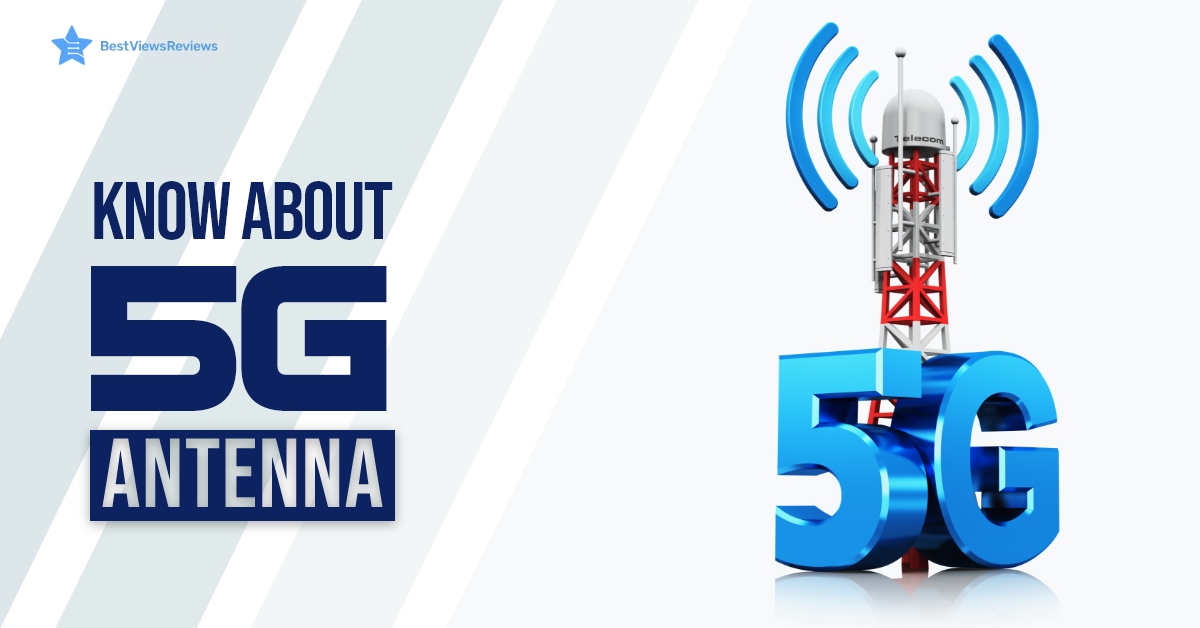
5G Network And Everything About It

5G Network Booster

5G is a new network standard that delivers faster network speed than the current 4G LTE standard. It is a step towards creating a self-sustaining global wireless network that connects machines, devices, and home equipment, virtually together. 5G operates on high spectrum frequency ranging from 24 to 100 GHz. The trials reported a super-fast speed of 71gbps with 5G compatible devices.

What Underlying Technologies Make Up 5G?

5G uses MIMO technology that allows the user to connect to an array of networks at the same time with minimal network latency and high transfer speed. 5G follows orthogonal frequency-division multiplexing (OFDM), to modulate the signal and reduce external interference. The full-dimensional beamforming/MIMO (FD-MIMO) technology ensures the direct transfer of signal to the end-user.

How is 5G Network Helpful?

5G network is helpful with its key benefits. It offers high transmission speed, low latency, and can connect a greater number of devices over the same network. The higher capacity of 5G is ideal for setting up a perfect IoT environment. 5G models offer lower latency, allowing users to connect remote devices virtually and experience real-time responses.

How Does a 5G Network Work?

5G uses radio spectrum waves with higher frequencies, called millimeter waves. These waves are less cluttered and are used to send information at a higher speed. Physical network slicing is a good feature of 5G. This allows network operators to slice networks according to their importance. A key aspect of 5G is the use of MIMO antennas to cover distant locations.

How Fast is 5G Network?

5G comes with an impressive, high-speed data transfer of 20 Gigabits-per-second (Gbps). The speed can vary with different operators. The average data pack features a speed of 100+ megabits per second (Mbps). 5G offers a downloading speed of more than 1 Gbps that is 11 times faster than the current 4G LTE model.

What Phones Can Use 5G Network?

Many network carriers are starting to roll out the 5G standard. The market does not have a variety of smartphones with 5G compatible hardware. Mobile phones with Snapdragon 5G platforms can access 5G networks. The popularity of 5G is driving the release of more 5G variants in the market. The Google Pixel 6 – 5G Phone is an unlocked Android 5G phone that gives you the flexibility to change network carriers.

List of Best 5G Smartphones

Samsung Galaxy A52 5G

The Samsung Galaxy A52 5G is a powerful device. It has a great all-round camera and an easy-to-use interface. It comes with impressive battery life but its major attraction is its blazing fast Snapdragon 778 5G chipset. The chipset is the best to support the new 5G standard. The smartphone features a 6.5-inch FHD+ Infinity-O display for the best visual experience.

OnePlus Nord N200

OnePlus Nord N200 is an Android smartphone with a 6.49″ touchscreen, a 5000 mAh battery, and also a side-facing fingerprint sensor. It’s one of the latest models in the OnePlus 5G series. This model stands in the market due to its many hardware upgrades. It comes with 64GB of included storage, which allows you to multitask with ease.

Motorola One 5G Ace

The Motorola One 5G Ace is a compact device but looks like a premium phone. It has a 6.19-inch screen and a 48-megapixel camera for all-round performance. This model offers superfast 5G speed for fast downloads. It comes with 6 GB RAM memory that allows you to run heavy applications and software.

What is the Role of Signal Repeaters and Boosters in 5G Networks?

5G networks give access to higher speed transfer, but signal blockers still continue to cause network lag and interference. The signal blockers mainly include-

  • Construction Material:- The material used in the construction of buildings such as concrete, steel, and bricks can block 5G signals.
  • Vehicle Material:- The material of your car can cause a lag in 5G network capacity.
  • Natural Barriers:- Natural barriers are mountains, forests, and small buildings, that are present between your place and the 5G cell tower.

A Signal repeater or booster is helpful in bypassing these signal blockers. It is an amplifying system that receives 5G radio frequencies and broadcast the amplified signals within your smartphone’s range.

A signal booster consists of 3 main parts; outside antenna, amplifier, and inside antenna. The outside antenna takes 5G signals from the nearest 5G cell. The amplifier has the job of amplifying received signals and then, the inside antenna broadcasts 5G frequencies in your building or vehicle space.

Buy Best 5G Network Boosters

UPPOON WiFi Extender

The UPPOON WiFi Extender is an excellent Wi-Fi range extender that works well with 802.11b/g/n/a/ac wireless router or gateway. It offers a super-fast speed of 1200mbps for 2.4ghz or 5ghz while covering a 5000 sq. ft. area. This model also supports high-security standards of web WPA/wpa2 and WPA-psk/wpa2-psk. It has got good reviews because of its one-tap set up.

HiBoost Cell Phone Signal Booster

The reviews of HiBoost Cell Phone Signal Booster show that it is a long-range signal amplifier that has a coverage area of 1500sq.ft. It boosts the data transfer speed and also delivers ultra-stable bandwidth. You can connect this device with HiBoost App to fine-tune max power and see how strong the signal is.

Cel-Fi GO X Signal Booster

This Cel-Fi GO X Signal Booster can boost 40 dB more than other boosters. It is compatible with almost all Wi-Fi routers, gateway, and access points. This signal booster covers a wide area of 1500 square feet and also delivers a lag-free connection to all devices. It includes 2x indoor dome antennas, 2x indoor panel antenna, and a 2-way signal splitter. 

Conclusion

The 5G network promises to have faster speeds and lower latency than its predecessors. You will need a 5G compatible smartphone and a network booster to access 5G networks. Network boosters also enhance the 5G experience while reducing network interference caused by signal blockers.

BestViewsReviews rates hundreds of signal boosters based on app support, build quality, connectivity range, customer support, signal strength, and overall satisfaction.
A Guide on Amplifying a TV Signal Booster

tv signal booster

A digital TV signal booster comes with the pros of a wider screen and you can also use a DTV converter box with it. The inevitable con is that digital signals are weaker and often need amplification for better transmission. Let’s see how you can amplify a digital TV signal today. TV has become everything it was never, and even better. You can see our informative guide on TV that will help you choose the best.

Is a Digital TV signal Booster Necessary?

No. There’s a reason your digital antenna doesn’t come with an amplifier installed by default. Amplifiers like Winegard LNA-100 might be problematic if you don’t need them or if you don’t use them correctly. Issues such as:

  • A signal that is too powerful – Your digital TV will have signal and reception issues if you boost your TV signal too much.
  • Interference – Improper installation might cause reception interference, affecting your neighbors’ TV reception, mobile phones, and other systems for broadcasting and communication.
  • Potential failure – It’s another component in your TV system that could break down and hinder your TV from working properly in the future.
  • Cost – It’s a waste of money if you don’t need one. Don’t acquire an amplifier if you don’t need one as part of your digital antenna setup. They should be able to explain why this isn’t a matter if your antenna technician recommends adding an amplifier. A Digital TV antenna picks up video signals that are broadcast over the air. Read our blog on digital TV antenna to watch your favorite TV shows seamlessly.

How is a Digital TV Signal Booster Used?

The number of stations you can watch depends on the signals broadcast in your area. Your reception quality depends on the distance from local towers. It includes other factors such as the weather, your surroundings, and the terrain. TV signal boosters are also TV Antenna Amplifier that improve the signal quality in areas where the signal from a TV transmitter is distant or weak. Signal boosters like Amplified HD Digital TV Antenna are frequently in use with aerials on properties with numerous obstructions, such as trees in rural areas, towering buildings in urban areas, or mountainous terrain.

How to Fix Reception Issues Before Boosting a Digital TV Signal?

The digital TV signals travel through the air like water mixing with the oil. These signals aren’t as dependable as earlier analog TV signals, which work in the rain, sleet, snow, and sunshine. Try the troubleshooting procedures if you have a problem with your indoor digital antenna. A TV tray is a type of collapsible furniture that folds into a table. Read our blog on why you need a TV tray if you are on the lookout for a suitable tray.

Step 1: Make Sure Your Wiring is in Good Shape.

Poor reception is almost always the result of faulty wiring. The first step in determining the source of a problem should always be to inspect your wires. Double-check that all the cords are firmly attached if you’re having trouble with your signal. You could try detaching and reconnecting the connections from your TV to your satellite dish and power sockets to see if a hard reset of the equipment fixes the problem.

Step 2: Improve your Aerial

The majority of individuals believe that purchasing any “aerial” gadget will help them improve their TV reception. Unfortunately, this is not the case. Television transmissions have been separated into two frequency bands since the analogue switchover: VHF (very high frequency) channels and UHF (ultra-high frequency) channels. Mostly poor TV reception is due to frequency compatibility concerns.

Your aerial must be capable of receiving digital frequencies at a sufficient intensity in order to increase your TV antenna reception. A wideband aerial upgrade may be necessary to get digital terrestrial frequencies. This is due to the fact that some areas have digital multiplexes that broadcast on a UHF band.

How to Choose Digital TV Signal Booster

Type of Booster

The type of antenna booster you want is the first thing you should comprehend and evaluate. Antenna amplifiers are of two categories. A mast amplifier is the first, while an inside amplifier is the second. It enhances the signal coming directly from the antenna, the mast amplifier requires a preamplifier to start.

An indoor amplifier requires a distribution amplifier and it’s mostly in use when you need to provide a single signal to a lot of TVs. The fundamental advantage of a mast amplifier over a distribution amplifier is that it enhances signals at the antenna’s strongest point as soon as they arrive. Our featured section offers a wide selection of TV antennas for you to choose from.

Noise Level

The amplifier boosters with a low noise level will perform much better than the ones with a high noise level. It is general to choose one with a noise level of 2dB or less. The noise levels of 4dB or more are excessive.

Signal Gain or Profit Level

The decibel level of signal gain or profit by the amplifiers is in (dB). You can expect a profit of 16 to 24 dB whereas a mast antenna might create 30 to 40 dB. Indoor amplifiers give sufficient signal gain in this scenario. There are indoor amplifiers that are suitable for both direct terrestrial and satellite television. They are only suitable for terrestrial masts and not for satellite masts.

Output Ports

This component is entirely dependent on your needs. Before you buy an antenna amplifier. You should figure out how many output ports you’ll need to connect it to your television. You’ll need to multiply the number of inputs you’ll require. It is generally advisable to purchase the exact amount of output ports that you require, as this may result in poor signal quality. You will need an amplifier with the required number of output ports after you decide how many televisions you will need to connect.

Where Is The Best Place to Put a TV Signal Booster?

The TV signal booster should always be placed as close to the antenna as possible. The signal loses intensity as it travels along the cable due to attenuation. It closes the gap between it and the background noise. The higher amount of noise will always be present when it is adequate later, and the signal will not be amplified.

What is the Difference Between a TV Signal Booster and an Amplifier?

There isn’t much to it; it’s essentially simply a different name for the same item. While a booster can be referred to as an amplifier, an amplifier cannot always be referred to as a booster. When a consumer asks for a ‘TV booster’ or ‘TV amplifier, understand exactly what he means. It should be referred to as an ‘audio amplifier if someone asks for an ‘audio booster,’ 

Conclusion 

An amplifier could be the ideal solution to significant signal loss. If you troubleshoot the reception issues and buy an amplifier with an ideal dB setting, it could enhance the over-the-air picture quality you see. 

Bestviewsreviews.com rates and ranks smart TVs based on their quality, performance, and durability. 

Happy shopping to you!