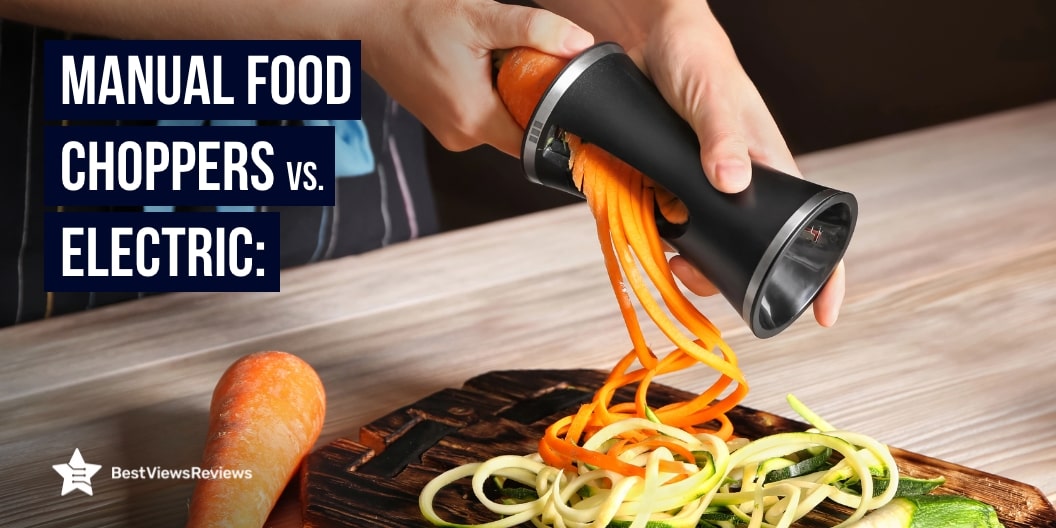
Manual Food Choppers vs. Electric: Why You Should Make the Switch

Manual Food Choppers

Food choppers are a game-changer in the kitchen, simplifying the process of prepping ingredients and saving valuable time. Whether you’re slicing vegetables for a salad or chopping nuts for a recipe, food choppers can make the task quick and efficient. But when it comes to choosing between manual and electric food choppers, it can be challenging to determine which is best suited to your needs. In this blog, we’ll break down the pros and cons of both types, highlight the key differences, and explore why you might want to consider making the switch to an electric food chopper.

What Are Manual Food Choppers?

Manual food choppers require physical effort, typically using a hand-operated mechanism like a pull cord, plunger, or crank to chop or dice ingredients. These devices are compact and often favored for their simplicity and portability. Manual choppers are a great option for small tasks, requiring minimal setup and maintenance.

Pros of Manual Food Choppers

  1. Affordable: Manual choppers like Manual Food Chopper with Container are generally more budget-friendly compared to electric models.
  2. No Electricity Needed: These choppers are perfect for off-grid cooking, outdoor use, or during power outages.
  3. Portable: Lightweight and compact, manual choppers are easy to store and travel with.
  4. Simple to Use: With no complicated parts or settings, manual choppers like Ourokhome Manual Food Processor are straightforward and beginner-friendly.

Cons of Manual Food Choppers

  1. Limited Capacity: They often have smaller chambers, making them less efficient for large batches of food.
  2. Physical Effort: Chopping by hand can be tiring, especially when dealing with tough ingredients like carrots or nuts.
  3. Inconsistent Results: Achieving uniformity in size can be tricky with manual choppers.
  4. Time-Consuming: For larger meals, manual choppers can slow down the prep process due to their small capacity and need for repeated use.

What Are Electric Food Choppers?

Electric food choppers use a motorized blade to chop, slice, or puree ingredients with minimal effort. They’re designed to handle a variety of food prep tasks quickly and efficiently. With various speed settings and blade options, electric choppers offer greater versatility compared to their manual counterparts.

Pros of Electric Food Choppers

  1. Effortless: With the push of a button, electric choppers do all the work, saving time and energy. Check Hamilton Beach Electric Vegetable Chopper comes with an easy-to-use design.
  2. Fast and Efficient: Electric choppers can process large quantities of food quickly, ideal for meal prepping and larger households.
  3. Consistent Results: Their precision ensures uniform chopping and dicing, which is perfect for recipes that require specific cuts.
  4. Versatile: Many electric models come with multiple attachments for slicing, grating, or even blending, making them multifunctional.

Cons of Electric Food Choppers

  1. More Expensive: Electric choppers typically come with a higher price tag due to their added functionality.
  2. Requires Power: You’ll need access to an electrical outlet, which can be inconvenient in certain situations.
  3. Larger Footprint: Electric choppers tend to be bulkier, taking up more counter and storage space.
  4. Maintenance: Cleaning electric choppers can be a bit more involved due to the extra parts and attachments.

What are the Key Differences Between Manual and Electric Choppers?

1. Ease of Use

Manual Choppers: Manual food choppers are often compact and straightforward. They typically consist of a chopping blade housed in a hand-operated mechanism. Using them involves pulling a cord, pressing a lever, or manually twisting a handle to engage the blades. While this process allows for precise control over chopping size and texture, it does require some physical effort. If you want to buy the best easy-to-use chopper, check JAYVAR chopper.

Electric Choppers: Electric food choppers, on the other hand, streamline the chopping process with a motorized blade system. A simple push of a button activates the blades, making it incredibly easy to chop, dice, or mince ingredients with minimal effort. This convenience is particularly beneficial for those who prefer a hands-off approach or need to process large quantities of food quickly.

2. Speed and Efficiency

Manual Choppers: While manual choppers can be effective, their efficiency depends largely on the user’s strength and technique. Chopping large volumes of food or tougher ingredients may require more time and effort. However, they often excel in precision tasks where control is crucial.

Electric Choppers: Electric choppers are designed for speed and consistency. With a powerful motor, these devices can handle bulk chopping in a fraction of the time it takes manually. This speed is especially useful for busy cooks who need to prepare ingredients quickly or for those who entertain frequently. You can check GANIZA Electric Food Chopper comes with a powerful 450W copper motor for quick processing.

3. Cleaning and Maintenance

Manual Choppers: Manual choppers usually have fewer parts, making them easier to disassemble and clean. Most components are dishwasher-safe, which adds to their convenience. However, some manual models may have intricate parts that require careful cleaning to maintain performance.

Electric Choppers: Electric choppers have more components, including the motor and various blade attachments. While the blades and bowls are often dishwasher-safe, the motorized base requires more careful handling. Cleaning can be more cumbersome, as it involves ensuring that electrical components remain dry and free from food residue.

4. Portability and Storage

Manual Choppers: Due to their smaller size and lack of electrical components, manual choppers are typically more portable and easier to store. They can be easily packed away in a kitchen drawer or cabinet, making them ideal for small kitchens or those who cook infrequently.

Electric Choppers: Electric choppers tend to be bulkier due to their motorized base. They require a dedicated storage space and a power outlet for use. While they offer great functionality, their size and reliance on electricity may limit their portability.

Why You Should Make the Switch from Manual to Electric Food Choppers?

Switching from manual to electric food choppers can transform your cooking experience, offering numerous advantages that streamline meal preparation. Electric food choppers bring unmatched efficiency and speed to the table, allowing you to process large quantities of ingredients with minimal effort, saving valuable time. They deliver consistent, uniform results with every use, eliminating the variability often encountered with manual chopping.

Additionally, electric models offer versatile functionality with multiple attachments for slicing, shredding, and pureeing, all while reducing physical strain on your hands and wrists. Modern electric choppers also come equipped with safety features and are generally easier to clean, making them a practical and ergonomic choice for both everyday cooking and special occasions. Embracing the convenience and precision of electric food choppers can make your kitchen tasks quicker, safer, and more enjoyable.

What to Consider When Buying a Food Chopper?

1. Blade Quality and Material

The blade quality is crucial for effective chopping. Look for blades made from high-quality stainless steel, as they offer durability and sharpness. Stainless steel resists rust and corrosion, ensuring the blade remains effective over time. Additionally, some choppers feature multiple blade types or adjustable settings to accommodate different chopping needs, from finely diced vegetables to coarser cuts.

2. Capacity and Size

The capacity of a food chopper determines how much you can process in one go. Consider your typical cooking needs—if you often prepare large batches, a larger capacity chopper will save time. Conversely, if you cook smaller portions or have limited storage space, a compact model might be more practical. The size of the chopper also affects ease of storage and handling.

3. Ease of Use and Cleaning

A food chopper should be user-friendly and easy to clean. Look for models with ergonomic handles and intuitive controls that make chopping effortless. Removable parts, such as the bowl and blades, should be dishwasher-safe or easy to wash by hand. Some choppers come with additional features like a cleaning brush to help maintain the blade’s sharpness and hygiene.

4. Safety Features

Safety is paramount when using a food chopper. Opt for models with safety locks or covers to prevent accidental blade exposure. Non-slip bases or suction feet help stabilize the chopper during use, reducing the risk of slips or spills. Ensuring that the chopper has proper safety features will help protect your hands and countertops.

5. Motor Power (for Electric Choppers)

For electric food choppers, motor power is an important consideration. A more powerful motor can handle tougher ingredients and process them more efficiently. However, higher power may also mean increased noise and energy consumption. Balance motor power with your specific needs, and check for features like adjustable speed settings to enhance versatility.

Conclusion

Both manual and electric food choppers have their advantages, but if efficiency and convenience are top priorities, making the switch to an electric food chopper is a no-brainer. With faster performance, consistent results, and the ability to handle a wider range of tasks, an electric food chopper can elevate your meal prep and make your time in the kitchen much more enjoyable. Whether you’re preparing small snacks or big family dinners, the right food chopper can make all the difference.
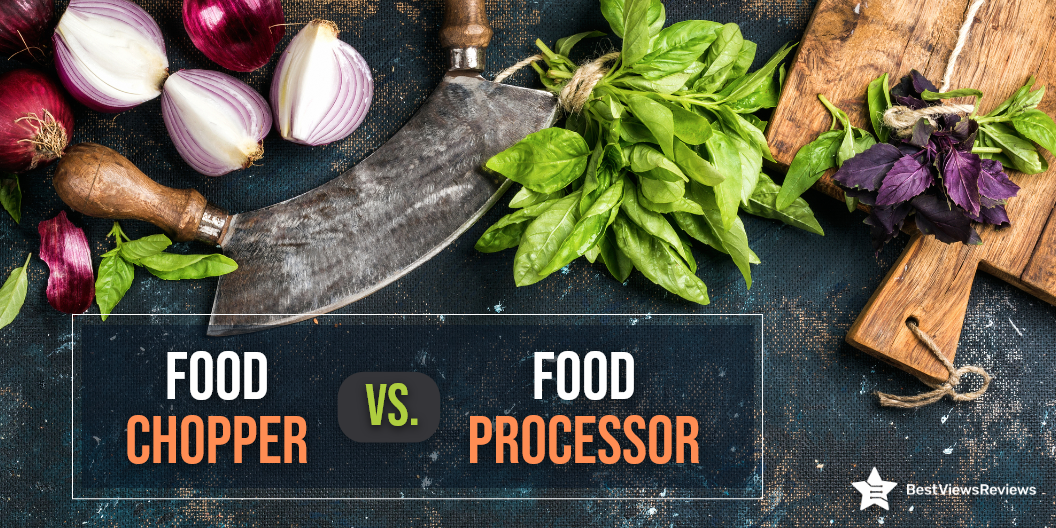
Food Chopper Vs Food Processor: What to Buy?

Food Chopper Vs Food Processor

The conflict between the food chopper vs food processor is not new. The majority of households today contain innovative appliances choppers, processors, and best-rated stand mixers. They make tasks like cutting, chopping, grinding, and processing convenient. A food chopper and food processor are members of the same family. So, it is easy to get confused when it comes to their uses. We have a blog on top food choppers where we explain the best products in detail. Read to know food chopper better.

A food chopper is efficient with smaller cups of fruits and veggies while a processor can process a large volume of veggies, fruits, and other food items. The basic function of both these devices is similar except processors are versatile and can chop, dice, shred, and blend too. In this blog, we will help you walk through the important details of both appliances to help you make a better buying decision.

Food Chopper Vs Food Processor: Comparison

Capacity

You can use a food processor to knead dough, blend, dice, slice, and whisk. The capacity of a food processor is 8-12 cups at a time. Standard food processors have a capacity of around 4 to 6 cups and can primarily chop and are ideal for dry ingredients.

Size

A food chopper is convenient and portable. Its lightweight nature makes it ideal for storage. Mini food choppers are compact and efficient. They come with a powerful motor. A food processor is not lightweight. It is ideal as a countertop appliance that is heavy and needs a stable surface to operate.

Functions

A food processor is multifunctional as compared to a food chopper. You can use a food processor for whipping the batter of your favorite cake or cookie, or to slice your veggies. You cannot use a food chopper for kneading or whipping as their mechanism won’t allow such actions. We have a dedicated buying guide on food processors for you to view. It will help you to choose the right product well.

Weight

A manual food chopper is lighter than a processor. It has several blades that help you accomplish tasks in the kitchen. They are ideal for small batches only. A food processor consists of a heavy and powerful motor that allows you to process large batches of food at once. It comes in a sturdy build that adds to its weight, resulting in instability.

Cost

An average food chopper can cost you around USD 30 to 35 while a good-quality chopper can range from USD 100. Powerful variants are equipped with a bigger size. A food processor can cost you anywhere between USD 130 to USD 600 depending on the features, built, and size.

Based on genuine reviews, Ninja Food Chopper is one of the best-selling food chopper in the market. It will cost you just about $42.99.

Versatility

A food processor is versatile and flexible. It can accommodate attachments that come with the package or if bought separately. It has a different blade for different-sized food items. A processor can perform functions like dicing, chopping, shredding, kneading, and whipping. A food chopper cannot multi-task and is limited to chopping dry ingredients or making a puree. The finesse a food processor can give outweighs the performance of a food chopper. You can use food choppers and food processors to prepare restaurant-like meals, right at your home.

Easy to Clean

Cleaning a food chopper is convenient. A food chopper has a simple build that allows you to clean thoroughly. A food processor is also simple to clean. The containers of processors are big enough to accommodate a thorough cleaning. Most choppers and processors are dishwasher safe and this quality makes them easy to maintain.

Food Chopper Vs Food Processor: Buy the Best

MAGICCOS 7-in-1 Food Processor

Reviews of MAGICCOS 7-in-1 Food Processor show that it is a compact and versatile appliance. It can chop ingredients into a consistency from fine to coarse. The stainless steel blade cuts through vegetables, fruits, nuts, and meat with ease. It comes with a chopping blade, dough blade, spatula and reversible blade disc that allows to make almost everything

Breville BFP800BSXL Food Processor

Breville BFP800BSXL Food Processor is an essential kitchen tool for chopping vegetables, nuts, and fruits. This chopper is great for chopping up various dishes. This appliance makes food preparation a breeze. It chops foods into fine pieces for a range of recipes and comes with 5 multi-function discs and 3 blades. This model has got positive reviews for its auto-timer settings and LCD display.

Cuisinart DFP-14BCNY 14-Cup Food Processor

Cuisinart DFP-14BCNY 14-Cup Food Processor is ideal for slicing, chopping, grinding, and pureeing your favorite items. It has a compact size, strong motor, and easy-to-hold ergonomic handle. This model uses 720 watts of energy and features  “on” and “off/pulse” buttons. It also offers single-touch operations and 7 food prep functions for your convince.

ZYLISS Easy Pull Food Chopper

Reviews of ZYLISS Easy Pull Food Chopper suggest that this model is great for travel and small kitchen spaces. It has a sleek multi-blade design that lets you chop your food ingredients in just some seconds. This appliance is hand-powered, which means you have to pull the handle for rotating stainless steel blades. You can create spicy salsa in just 5 pulls.

Kuhn Rikon Pull Chop Chopper

Kuhn Rikon Pull Chop Chopper comes with a double container capacity and blade attachments. It helps you to chop vegetables with ease. Close the lid and chop, dice, and cube all at once. This chopper is safer to use than a knife, and the results are far more uniform. This model has got a good customer rating and excellent reviews for its safe as well as easy-to-wash design.

Food Chopper Vs Food Processor: The Final Verdict

In this conflict between food chopper vs food processor, the food processor takes the focus. Its versatility, affordability, and advanced features make them handy for different kitchen chores. If you are planning to buy a food chopper, keep in mind that the functions and controls are limited.

We also have a blog to cast out the difference between a food processor and a blender. Reading this blog will help you make the right buying call. A processor is your best bet if your kitchen operation is diverse or you like to experiment. If you want to quicken your shopping process, you should go with a food chopper. We hope this blog, food chopper Vs. a food processor helps you in making the right choice.

BestViewsReviews helps you find the leading food choppers and top-rated food processors on the market by rating and reviewing them based on quality, convenience, and durability. Get unbiased, honest reviews of products before you buy.

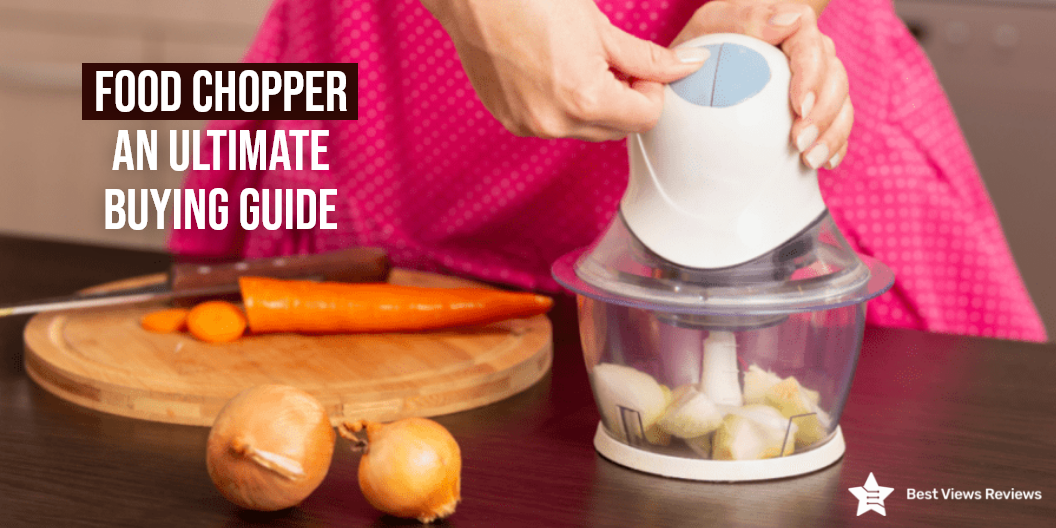
Food Chopper: An Ultimate Buying Guide

food chopper

A food chopper is a compact kitchen appliance that can chop, purée, or mix a variety of foods. These appliances make the tedious task of chopping food easy and also save immense time. You can use this chopper to chop fruits and vegetables like leafy greens and tangy fruits. Food choppers can come in manual or electric variants. They are small in size and often, do not include a feed tube, unlike food processors. Food choppers and processors are different kitchen gadgets.

Benefits of a Food Chopper

Reduced Time and Effort

The advantages of this appliance are innumerable but the primary advantage is the time and effort you save. The blades are sharp enough to cut through large pieces of fruits and vegetables effortlessly. You no longer have to dice them into small pieces. A food chopper can do it for you. ZYLISS Easy Pull Food Chopper has got good reviews for its multi-blade design that blends ingredients in seconds and is considered one of the best choppers to have in your kitchen.

Mess-free Operation

Food choppers help you deal with all the ingredients at the same place, allowing you to manage the waste effectively. It also limits the volume of waste because it can easily cut through hard-to-cut pieces, that otherwise can be difficult to cut by a knife.

Versatility

The different attachments help you perform various jobs like chopping, kneading, whisking, and slicing easily. Such versatility lets you create restaurant standard dishes right at the comfort of your home. Mandoline Slicer Vegetable Chopper is one such versatile variant with 3 grater blades and 2 slicer blades.

Easy Cleaning

You can go with a chopper that’s dishwasher safe if you cannot spend much time in the maintenance of your device. This saves you the scrubbing time and helps you clean all the parts quickly and efficiently. You can also clean all food debris in the hard-to-reach corners easily. For instance, all parts of Ninja Food Chopper are dishwasher-safe. Reviews show that this mode is convenient to clean and maintain.

Things to Keep in Mind Before Buying a Food Chopper

Electric Vs. Manual Food Chopper

You can take your pick between a manual chopper and an electric one depending on the number of meals you want to whip. A manual chopper like Brieftons QuickPush Food Chopper comes with a variety of functions and attachments that lets you prepare your meals easily. An electric chopper, on the other hand, might offer limited functions. You can operate a manual chopper with fewer efforts. An electric chopper requires it to be plugged in and is expensive as compared to a manual one.

Capacity

The capacity of the container is also important as it decides the volume of veggies you’ll be able to chop. A standard chopper with a capacity of 1 to 5 cups is suitable for preparing a small volume of food. You can go with a large chopper with a capacity of 7 to 15 cups for preparing large batches of food. Reviews of Kuhn Rikon Pull Chop Chopper show that it is an ideal choice if you are looking for one with a 2-cup capacity.

Mini Variants

Mini choppers are your best mate if you want to go with a version that helps you attain fine slices and smooth consistency in a compact manner. These choppers require minimal effort and chops with great finesse. Most mini choppers are manual but they do their job perfectly.

Can a Food Chopper Puree?

Food choppers are primarily used for chopping veggies, but they can also be used to puree small batches. Food processors are good for pureeing smoothies with the right consistency. The size of food chopper is generally smaller than food processors and that is why they can only emulsify liquids in a small amount.

Can a Food Chopper be used as a Food Processor?

The answer is No. Food choppers and processors are different appliances and have different specific uses. You can use food choppers for many tasks that you can perform with food processors but you can not slice, shred or dice in food choppers. They are also not good for making highly-consistent smoothies. We have a blog dedicated to tell you everything about food choppers vs. food processors.

Can a Food Chopper Make Hummus?

The answer is Yes. You can make hummus with the help of your food chopper. Many brands offer multi-purpose food choppers that let you make delicious hummus with ease.

Conclusion

Food choppers are adaptable and flexible gadgets. That is why they are quite common in kitchens nowadays. Their ergonomic nature and multifunctionality have made them the ‘go-to’ gadgets. They can be used for chopping softer food items like fruits and also tougher items like nuts and meats. Food choppers can be an invaluable addition to your kitchen and life.

Food processors are also a beneficial addition to your kitchen space but they are available in different types. Read our blog to know which is better between food processor vs blender.

BestViewsReviews rates and reviews hundreds of products on the basis of quality, durability, and performance.