Best Selling DSLR Cameras in 2023

dslr cameras

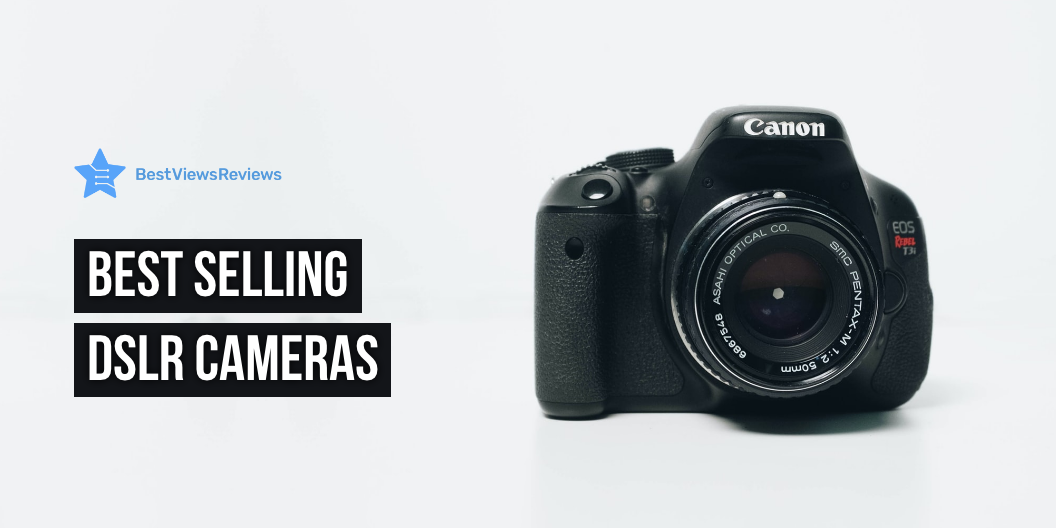
DSLR cameras are digital single-lens reflex cameras. They use a digital sensor to capture images instead of film. These cameras are also equipped with a reflex mirror, so the user can see what they are shooting. This type of cameras are often preferred by professional photographers and those who are serious about photography. DSLR cameras typically offer more features and better image quality than point-and-shoot cameras. They also tend to be more expensive.

Factors to Consider Before Purchasing The Best DSLR Camera

Sensor Size

Sensor size is one of the most important considerations when choosing a DSLR camera. The sensor is the image-capturing device in the camera, and its size determines the camera’s capabilities and image quality. There are two main types of sensor sizes in DSLR cameras: full frame and APS-C.

Full frame sensors are the largest sensors available in DSLR cameras. They are ideal for landscape and studio photography, as they provide the largest image area and the best image quality. The full frame sensors are also the most expensive type of sensor, and they are not necessary for all types of photography.

APS-C sensors are smaller than full-frame sensors, but they are still larger than the sensors in point-and-shoot cameras. Cameras with APS-C sensors like the top-rated Canon EOS Rebel SL2 DSLR Camera are good for general photography and for photographers who want to be able to zoom in on their subjects. APS-C sensors are also less expensive than full-frame sensors, making them a good option for budget-conscious photographers. You can also read through our blog for the best budget digital camera in 2023.

When choosing the best DSLR camera, it is important to consider what type of photography you will be doing. Reviews of Canon EOS 6D are positive for its full-frame photo sensor that allows for capturing incredible quality photos.

Body Details

It is good to consider the body details of your selected DSLR camera. The front of a DSLR camera body is where the lens mounts. This is where you attach your camera lens of choice. Behind the lens, the mount is the mirror box this is where the reflex mirror is located. The reflex mirror is what allows you to see through the viewfinder.

The top of the camera body has the mode dial. You can use it to select the camera’s shooting mode. For example, you can use the mode dial to select modes like aperture priority, shutter priority, and manual. You’ll also find the shutter release button on the top of the camera body.

The back of the camera body is where the viewfinder is located. This is what you look through to compose your shots. You’ll also find the LCD screen on the back of the camera body. The bottom of the camera body equips the battery and memory card. You can also go with the Canon EOS Rebel T7 DSLR Camera Bundle which is packed with all manufacturer-supplied accessories. This model is great for users wanting to take the next step with their photography.

Lens

A camera lens is a tiny, round, convex piece of glass that focuses light from what you see through the viewfinder into a tiny, (typically) 35mm spot on the back of your film, DSLR, or mirrorless camera.

There are all sorts of different camera lenses, from wide-angle to telephoto, and each one produces a different effect. But what do all these different types of lenses actually do?

Types of Lenses

  • Wide-angle Lens: This is a lens with a short focal length, typically between 10 and 35mm. These lenses are great for capturing large scenes, or for getting close to your subject while including the background.
  • Telephoto Lens: The lens with a long focal length, between 70 and 300mm. These lenses are great for capturing distant subjects, or for getting close to your subject while still being able to keep the background out of focus.
  • Prime Lens: It comes with a fixed focal length, meaning it can’t zoom in or out. Prime lenses are typically faster, sharper, and more compact than zoom lenses, and they’re often preferred by professional photographers.
  • Zoom Lens: These lenses come with a variable focal length, meaning they can zoom in and out. Zoom lenses are great for versatility, but they’re often not as sharp or fast as prime lenses.
  • Macro Lens: This is a lens with a short focal length, typically between 10 and 35mm. These lenses are great for taking close-up shots of small subjects, such as flowers or insects.
  • Fisheye Lens: These lenses, with a wide field of view, between 100 and 180 degrees are great for capturing ultra-wide panoramic shots. They are also good for distorting your subject in a fun and creative way.

Megapixel Resolution

A DSLR camera typically has a much higher megapixel resolution than a standard point-and-shoot camera. This gives you the ability to print your photos at a larger size or to crop your photos more tightly without losing detail. The downside of a high-megapixel camera is that the photos can take up more storage space and require more processing power to edit.

When choosing a DSLR camera, you’ll want to consider both the megapixel resolution and the sensor size. A higher megapixel camera isn’t necessarily better, as the sensor size also affects image quality. If you plan on printing your photos at a large size or cropping them tightly, look for a DSLR with a high megapixel resolution. If you just want to take great-looking photos for social media or small prints, a camera with a lower megapixel count may suffice.

Here are some things to keep in mind when considering megapixel resolution:

  • The number of megapixels doesn’t affect the quality of the photo, only the size.
  • A higher megapixel camera will require more storage space and processing power.
  • A DSLR with a large sensor will produce better-quality photos than a small sensor with a high megapixel count.
  • You can always crop and resize a photo to fit your needs, regardless of the camera’s megapixel resolution.

Video Recording

DSLR videography is the art of capturing video footage using a digital single-lens reflex (DSLR) camera. A DSLR camera has a mirror that reflects the light coming through the lens into the viewfinder, making it possible to see what you’re going to capture. When you press the record button, the mirror flips up and the light hits the image sensor, which captures the video footage.

DSLR cameras can capture beautiful video footage, but there are a few things to keep in mind if you’re planning on using one for your next project.

First, DSLR cameras have a limited recording time due to the amount of heat they generate. Most DSLRs can only record video for a few minutes at a time before they need to take a break to cool down. Second, DSLR cameras also have a tendency to overheat when recording video in 4K resolution, so it’s important to keep an eye on the temperature of your camera. And finally, DSLR cameras are difficult to use for handheld video, so it’s important to invest in a good tripod.

Modes and Editing Features

You should consider modes and editing features before finalizing your purchase. DSLRs typically have interchangeable lenses with a variety of focal lengths and apertures. DSLRs use one of two methods to determine which lens is currently active. Most use a mechanical linkage the user operates before taking the picture. A few use a sensor that detects the lens type and activates the appropriate autofocus and metering programs.

With the exception of a few top-of-the-line models, DSLRs usually record images and videos to a removable SD card. They may also have the ability to record to other types of storage media as well, such as memory sticks, CompactFlash cards, and even hard drives.

Some DSLRs can shoot HD video as well as stills. The video is recorded to the same removable SD card as the still images. A few DSLRs can also shoot in 4K resolution.

Most DSLRs have a mode dial on the top of the camera, which the user can rotate to select between the camera’s various modes. The most common modes are fully automatic, semi-automatic, and manual.

Fully automatic mode is sometimes called “point and shoot” mode because the camera does all the work for the user. The user simply points the camera at the subject and presses the shutter button. The camera then selects the appropriate shutter speed, aperture, ISO, and focus for the subject. The top-reviewed Canon EOS 2000D Camera offers automatic shooting mode, along with scene intelligent auto Mode, creative filters, and creative auto modes to provide you with versatility and power.

Which is Better a DSLR or a Digital Camera?

DSLR cameras have better autofocus features compared to digital cameras but that’s not the only reason why DSLRs are better. DSLRs also have larger sensors, which means that they can capture more light and produce better images. In addition, DSLRs have better lenses and can take advantage of a wider range of accessories.

You can still consider buying digital cameras because of their ease of use and portability. It is good to know what are the things to consider before buying a digital camera.

What is the Difference Between DSLR and SLR?

There are many differences between DSLR and top-quality SLR cameras, but the most important difference is that DSLR cameras use digital technology to capture images, while SLR cameras use film.

DSLR cameras like Nikon D3500 W/ AF-P have many advantages over SLR cameras. They are versatile because you can transfer your images to a computer or other digital device with ease. You can also edit and manipulate your images on a computer, which is much more difficult with film.

DSLR cameras also have higher resolution than SLR cameras, so you can print your images at a higher quality. And, because DSLR cameras use digital technology, you can take an infinite number of images without having to worry about running out of the film.

The DSLR cameras also have some drawbacks. They are usually expensive than SLR cameras, and they can be difficult to use. Overall, DSLR cameras are the better choice for most photographers.

Conclusion

DSLR cameras are great for anyone looking to get into photography. They offer a wide range of features and functions that are simply not available on other types of cameras, and they are well worth the purchase. DSLR cameras also offer many options for those who want to get the most out of their photography.

You can also get incredible detail and resolution with a medium format digital camera. Read our blog for the best medium format digital cameras in 2023.

BestViewsReviews is your one-stop shop for all the information you need to make an informed decision. Get the best reviews and ratings on the best camera cases and top camera batteries you’re interested in before you buy!
DSLR Camera vs Mirrorless Camera: Choose the Right One

dslr camera vs mirrorless

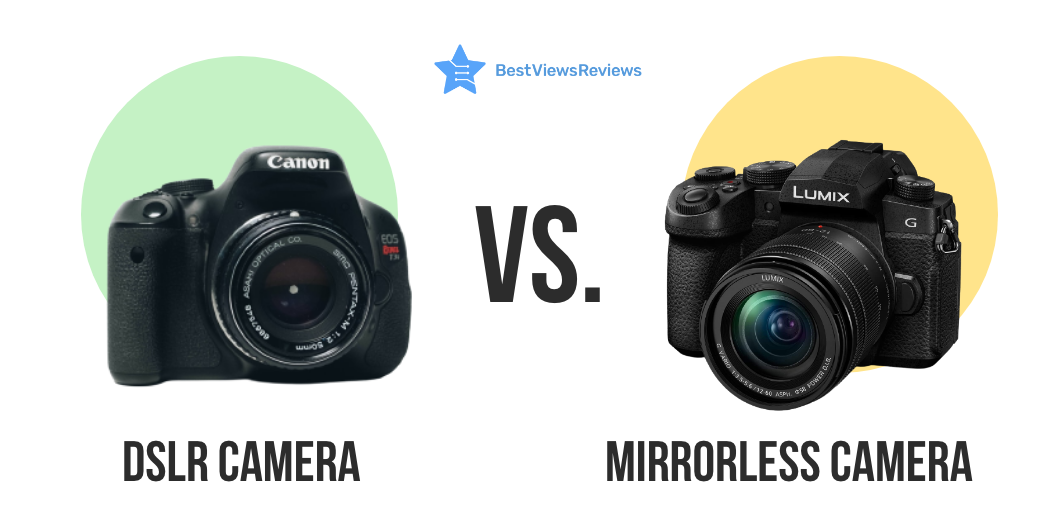
Digital single-lens reflex cameras (DSLR) and Mirrorless cameras are the two main types of digital cameras available on the market today. DSLR camera vs mirrorless is the biggest debate question. Both have their own unique benefits and drawbacks that make them ideal for different types of photography. Take a look at our other blog on digital cameras and know what are the different things to consider while buying a digital camera,

What is a DSLR camera?

A DSLR camera is a digital single-lens reflex camera that uses a digital image sensor to capture images. The DSLR camera is the successor to the analog single-lens reflex camera and offers many advantages over its predecessor. The DSLR camera is a more versatile and powerful tool than the analog camera.

The top DSLRs are a great choice for many professional photographers and serious amateurs. They offer superior image quality, advanced features and controls, and the ability to interchange lenses to suit different shooting situations. DSLR cameras typically have large image sensors that produce high-quality images and offer the ability to shoot in RAW format, giving you greater post-processing flexibility.

What is a Mirrorless Camera?

A mirrorless camera is a type of digital camera that does not use a mirror or optical viewfinder. It uses an electronic viewfinder (EVF) or LCD screen to display a live preview of the scene. This allows the camera to be smaller and lighter than a traditional DSLR camera.

Mirrorless cameras have become increasingly popular in recent years, as they offer many of the same advantages as a DSLR camera, but without the bulk. They are ideal for travel photography, as they are easy to carry and can be slipped into a bag or pocket. Many top-rated mirrorless cameras also offer features that appeal to videographers, such as 4K video recording and advanced autofocus systems.

What is The Difference Between Mirrorless Camera and a DSLR?

DSLR Camera vs Mirrorless: Size

The usual size of a DSLR is larger than a mirrorless camera. A mirrorless camera might be a better option if you are looking for a camera that is easy to carry around with you.

The majority of mirrorless lenses weigh the same as DSLR lenses. Larger and heavier cameras would be the better choice if you frequently use large lenses. It would be more difficult to balance a lightweight camera and a heavy lens.

Battery Life

Mirrorless cameras tend to have shorter battery lives than DSLRs because they rely on an electronic viewfinder rather than an optical one. This means that the mirrorless camera’s sensor is always active, which drains the battery more quickly.

DSLRs only activate the sensor when the shutter is open, which conserves battery power. A DSLR may be a better choice for you if you’re planning on doing a lot of shooting. A mirrorless camera can still be a great option if you don’t mind carrying around extra batteries.

DSLR Camera vs Mirrorless: Image Quality

A camera with a high image quality will be able to take clear and vibrant photos, while a camera with a lower image quality will produce photos that are blurry and lack color. A DSLR will have a higher image quality than a mirrorless camera. This is because DSLRs use an optical viewfinder, which allows the camera to gather more light and produce sharper images.

Shooting Speed

The shooting speed of a camera is the number of pictures it can take per second. The higher the shooting speed, the more pictures you can take in a given period. This is important if you plan to take a lot of pictures in a short amount of time, such as at a sporting event or during a family vacation.

DSLR cameras typically have a higher shooting speed than mirrorless cameras. There are a few mirrorless cameras that have a very high shooting speed, such as the Canon EOS R6 which can take 20 pictures per second.

User Experience

Different cameras have different user experiences, and what works for one person may not work for another. Some people prefer the simplicity of a point-and-shoot camera, while others prefer the more advanced features of a DSLR. It simply depends on your personal preferences.

Mirrorless cameras and DSLRs both have their pros and cons when it comes to user experience. Mirrorless cameras are typically smaller and lighter than DSLRs, making them more convenient to carry around. They also tend to have shorter shutter lag times which means you can capture images more quickly. Mirrorless cameras can be more difficult to use in low-light conditions.

DSLR Camera vs Mirrorless: Interchangeable lenses

There are advantages and disadvantages to both types of cameras, but if you’re serious about photography, then you’ll probably want to go for a camera with interchangeable lenses. You can change lenses to suit the particular situation you’re shooting in, and you’re not limited by the fixed focal length of a point-and-shoot.

You have to buy the camera body itself, but you also have to purchase one or more lenses separately. It depends on the brand and quality of lenses you want. They can be quite expensive. You’ll get much greater flexibility and creativity in your photography if you’re willing to invest in a good set of lenses. Give some thought to the type of lenses that are available for the model you want to buy.

Video Quality and Autofocus

Every camera today can record videos and also have an option of autofocus, but the difference between the two cameras’ ability to do so will ultimately depend on the quality of the videos they can make.

Although there are many lens options available for DSLRs, only high-end DSLR models can produce 4K or Ultra HD quality films. Mirrorless cameras have an advantage in this situation because they can capture images of such quality even with certain affordable versions.

Pros And Cons of DSLR Cameras

Pros

  • Excellent image quality: DSLR cameras produce some of the highest-quality images of any camera type. This is because of their large image sensors, which allow for greater detail and dynamic range.
  • Versatile shooting capabilities: DSLRs offer a wide range of shooting modes and features, making them suitable for everything from casual photography to more advanced applications.
  • Access to a wide range of lenses: One of the biggest advantages of DSLR cameras is the huge selection of lenses that are available for them. You will surely find a lens that meets your needs whether you’re looking for a wide-angle lens for landscapes or a telephoto lens for sports and wildlife photography.
  • Fast performance: DSLR cameras are typically very fast which means you won’t miss a shot even if the action is happening quickly.

Cons

  • Size and weight: DSLR cameras are typically larger and heavier than other camera types, making them less convenient to carry around.
  • Cost: DSLR cameras are generally more expensive than point-and-shoot or mirrorless cameras.
  • Complexity: DSLRs can be complex to use, especially for those who are new to photography.
  • Limited battery life: The battery life of DSLR cameras is often shorter than that of other camera types, so you’ll need to be prepared to recharge or carry extra batteries with you.

Pros And Cons of Mirrorless Cameras

Pros

  • Mirrorless cameras are smaller and lighter than DSLRs, making them ideal for traveling and street photography.
  • Since there is no mirror, the shutter sound is quieter, making mirrorless cameras ideal for shooting candid shots or in places where silence is required (like a library or museum).
  • Mirrorless cameras have a shorter shutter lag than DSLRs, meaning you can capture split-second moments more easily.
  • Mirrorless cameras have an electronic viewfinder (EVF), which means you can see the effects of your settings in real-time, making it easier to get the shot you want.

Cons

  • Mirrorless cameras can be more expensive than DSLRs, especially if you invest in a high-end model.
  • Mirrorless cameras have shorter battery life than DSLRs, so you may need to carry around extra batteries if you plan on shooting all day.
  • The mirrorless cameras don’t have the same selection of lenses as DSLRs.
  • Some mirrorless cameras have smaller sensors than DSLRs, which can result in lower-quality images.

Best DSLR Camera and Mirrorless Camera on The Market

Nikon D3500 W/ AF-P DX NIKKOR 18-55mm f/3.5-5.6G VR Black

The reviews of Nikon D3500 are good because it has built-in Bluetooth helps in easy sharing and is compatible with all phones. This model comes with a 15x larger sensor that offers sharp and clear picture quality. It features a compact design that makes it suitable for traveling.

Sony Alpha 7C Full-Frame Mirrorless Camera

The reviews of Sony Alpha 7C show that it is the top-rated mirrorless camera. It features a 15-stop 5 dynamic range that allows for capturing high-quality images. This model has a built-in 693 phase-detection and 425 contrast AF points that provide 93 image coverage. It is a lightweight camera that makes it easily portable.

Fujifilm X-T3 Mirrorless Digital Camera

Fujifilm X-T3 Mirrorless Digital Camera has a built-in SD card and HDMI output that makes it compatible with various devices. It features 2.16M phase detection pixels that increase the phase detection AF area to the entire frame. The zoom, aperture, and focus rings have just the right amount of torque for better handling.

Canon EOS Rebel SL2 DSLR Camera

Canon EOS Rebel SL2 DSLR Camera has got excellent reviews because it has a high-resolution touch screen monitor that supports both touches AF and touches shutter release functionality. It has built-in Wi-Fi, NFC, and Bluetooth technology that allows it to pair with a smartphone to wirelessly share photos/videos.

You can also read our other blog on the Canon digital cameras and get options of top-rated models.

Do Professional Photographers Use Mirrorless Cameras?

Yes, mirrorless cameras are preferred by many professional photographers when shooting landscapes or wildlife because they are portable, quick, and quiet. Many photojournalists and vacation photographers carry a small mirrorless camera for convenience.

Why Are Mirrorless Cameras More Expensive Than DSLRs?

The main reason mirrorless cameras are more expensive than DSLRs is because they are a newer technology. There are fewer mirrorless cameras on the market, and they tend to be more expensive than their DSLR counterparts. Mirrorless cameras have interchangeable lenses, which means you can buy different lenses to fit your needs. They also tend to have better autofocus systems and more advanced features like 4K video recording.

Is DSLR Still Worth Buying?

DSLR cameras are definitely still worth buying! They offer amazing image quality, versatile shooting capabilities, and are user-friendly. DSLRs also tend to be a more affordable option than other types of cameras, making them a great option for budget-conscious photographers. You can check models like Canon EOS T7 DSLR Camera that offers sharp details, accurate colors, and low-noise imaging in both bright and low-light shooting situations.

Conclusion

Modern DSLR camera vs mirrorless, both show how far digital camera technology has progressed. They are both capable of producing never-before-seen image quality with remarkable performance and simplicity. You can also read about waterproof cameras and get the top 5 options.

BestViewsReviews ranks and rates hundreds of top-quality camera batteries based on quality, durability, and convenience.